TO NAP OR NOT TO NAP
REST TIME IN THE EARLY YEARS
We get a lot of questions from families about nap and rest time at Harmony—understandably so! As parents ourselves, we deeply understand that well-slept children create happy households, a functional schedule, and (hopefully!) well-slept parents—whereas under-rested children struggling with disrupted sleep can mean quite the opposite.
Children’s sleep or lack thereof similarly impacts time away from home too. Adequate sleep allows a child to focus, acquire new information and skills, regulate emotions, and make positive behavioral choices—each of which comes into play throughout a school day surrounded by peers.
In the early years, children are exposed to so many new experiences, and absorbing so much at every moment, their bodies and brains need to pause during the day to recharge and reset for a new session of learning and exploration before bedtime. Whether this pause should be true sleep or simple quiet time varies for each individual child, based on a variety of factors.
And all of the above contribute to why we build our full-day programs around an intentional, carefully timed rest period in the early afternoon.
REST AS A FOUNDATION FOR GROWTH
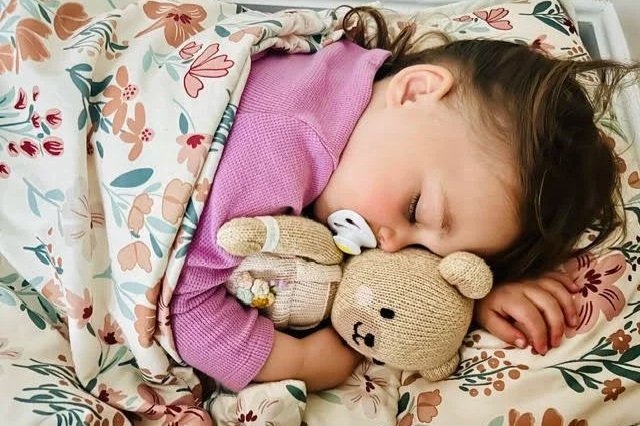
Just as consistent rest is an essential component of building strength, endurance, and muscle in exercise, it is an essential component of children’s growth and building themselves—physically, emotionally, socially, and cognitively.
Beneath the stillness we see on its surface, children’s sleep is deeply active. It consolidates learning, allows memories to move from short-term to long-term, helps process the emotions of the day, restores physical energy, and supports biological growth and development.
For children’s “optimal health, daytime alertness, and school performance,” The American Academy of Sleep Medicine (AASM) recommends the following cumulative sleep ranges each day (including naps):
Infants (4-12 months) – 12-16 sleep hours per day
Ages 1 & 2 – 11-14 sleep hours per day
Ages 3-5 – 10-13 sleep hours per day
Ages 6-12 – 9-12 sleep hours per day
Though individual needs may vary, daily sleep within these guidelines, says AASM, improves children’s “attention, behavior, learning, memory, emotional regulation, mental and physical health, and overall quality of life.” The American Academy of Pediatrics (AAP) endorses these recommendations.
Guidance like this is a major reason why the Massachusetts Department of Early Education and Care requires preschools to offer an extended period of sleep or rest after four or more school hours—with developmentally appropriate quiet activities provided for children who either wake early or don’t sleep.
WHAT REST TIME LOOKS LIKE AT HARMONY
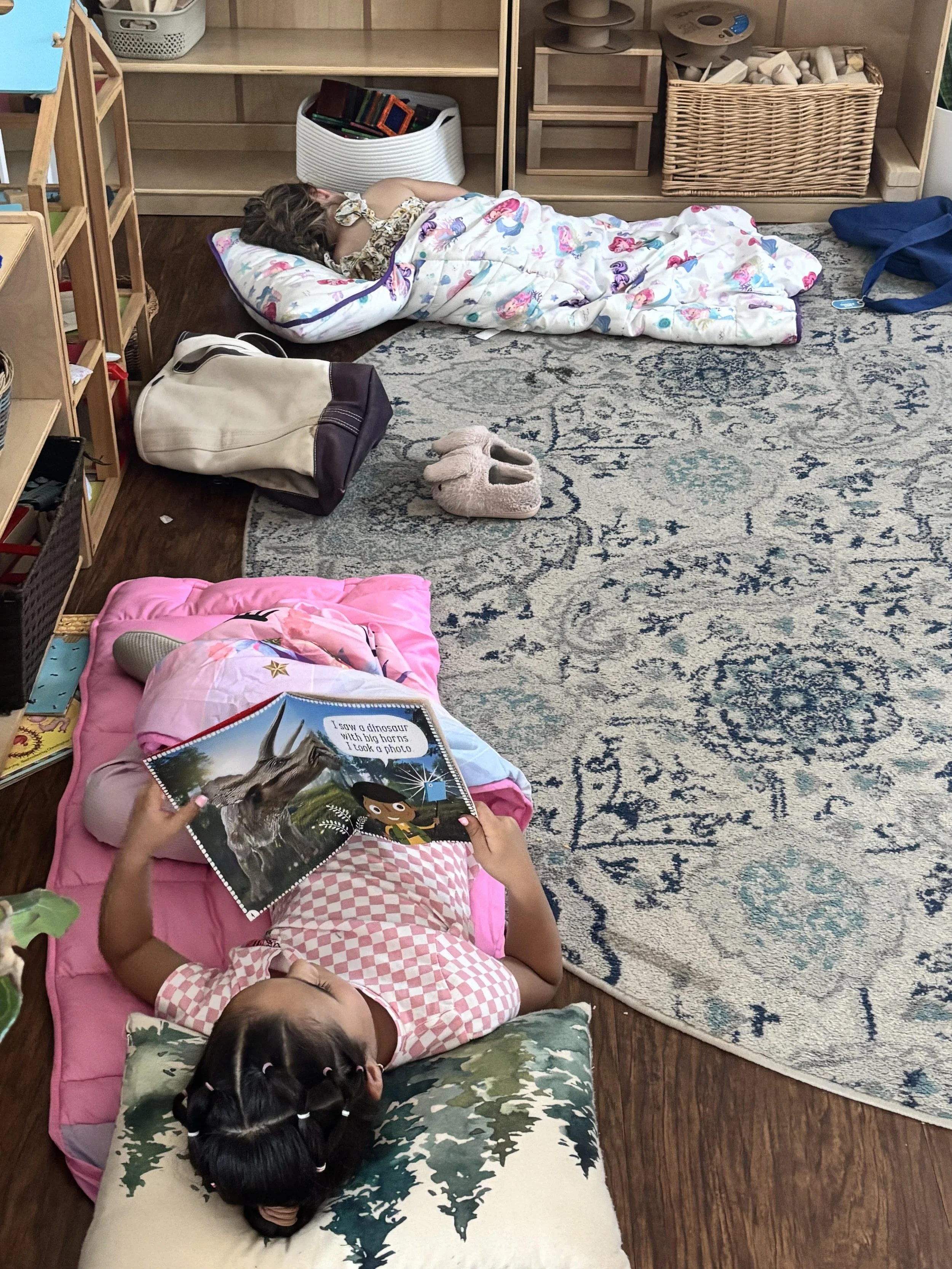
Our days at Harmony are carefully designed to reflect our signature Harmony Approach to the early years—balancing a cycle of active movement, exploration, and social engagement with calm and quiet. By the time we reach rest time each day, children have navigated friendships and peer problem-solving, participated in imaginative and intellectual play, explored the outdoors, and experienced a full morning from sensory, cognitive, and social-emotional learning perspectives. It may all look like simple play, but every second, children are forming new neural connections beneath what we see on the surface, and using so much energy in the process! Rest time provides them a much-needed pause to recharge, process, and reset for more of this important work in the afternoon at Harmony and later, at home.
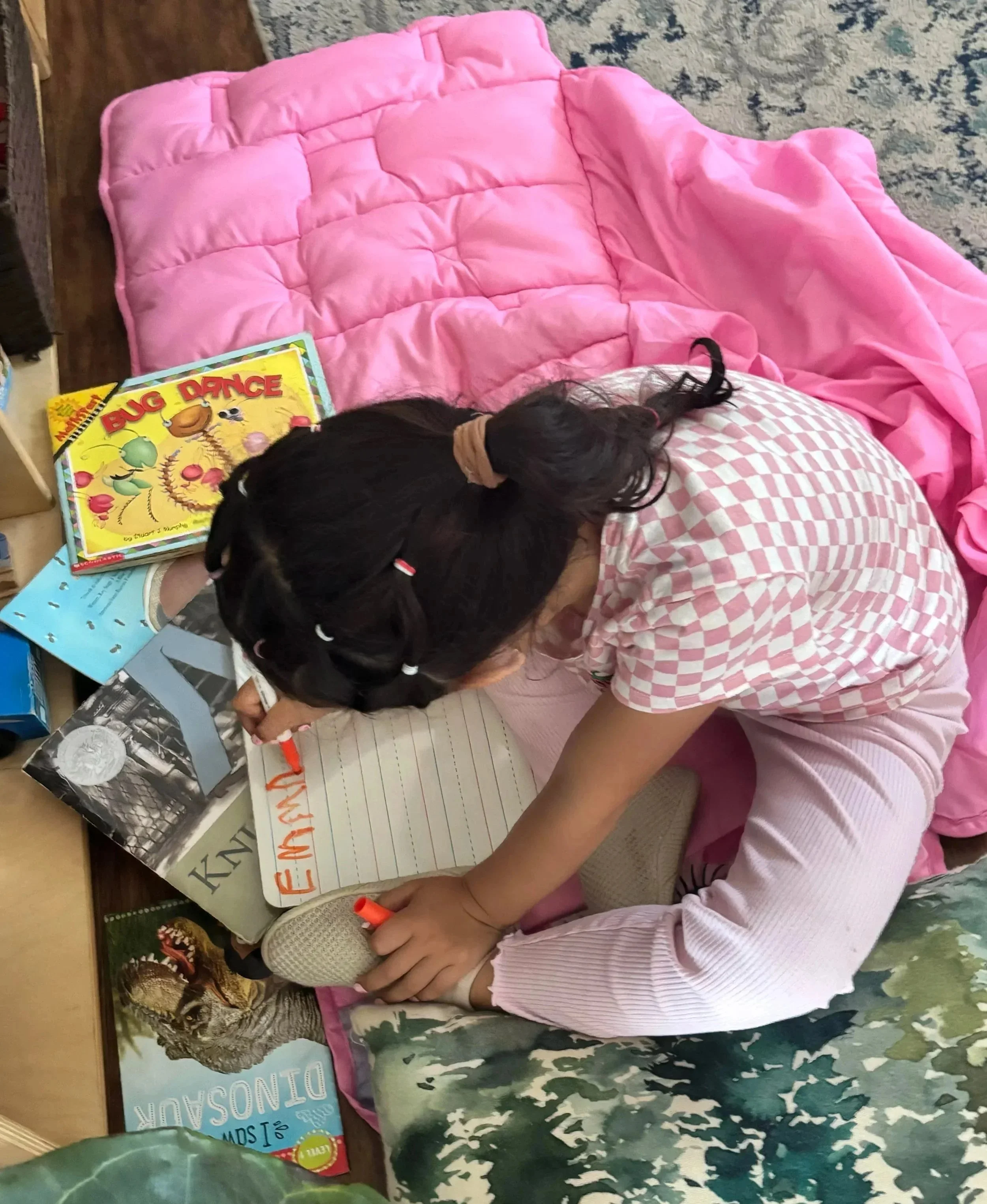
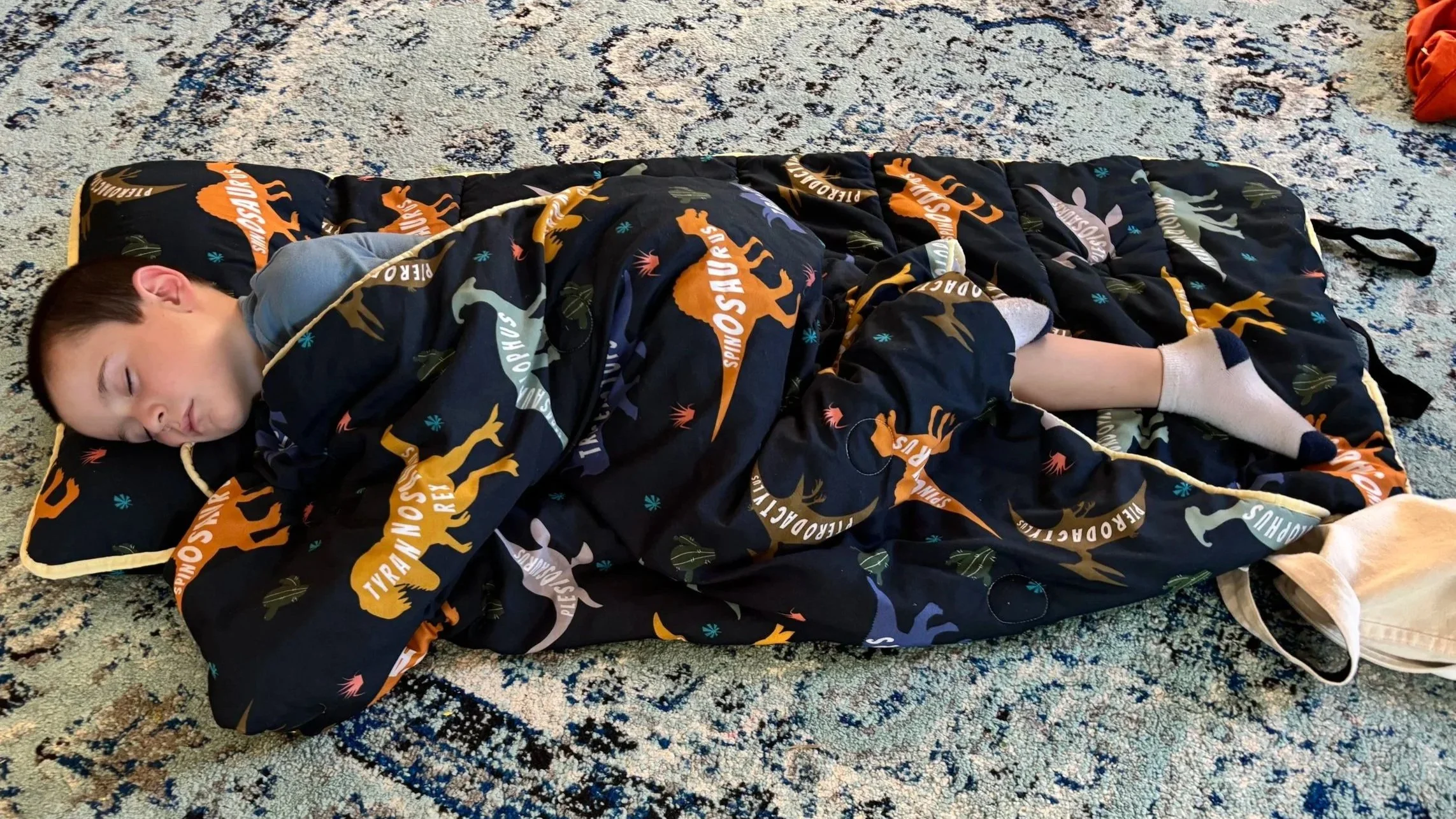
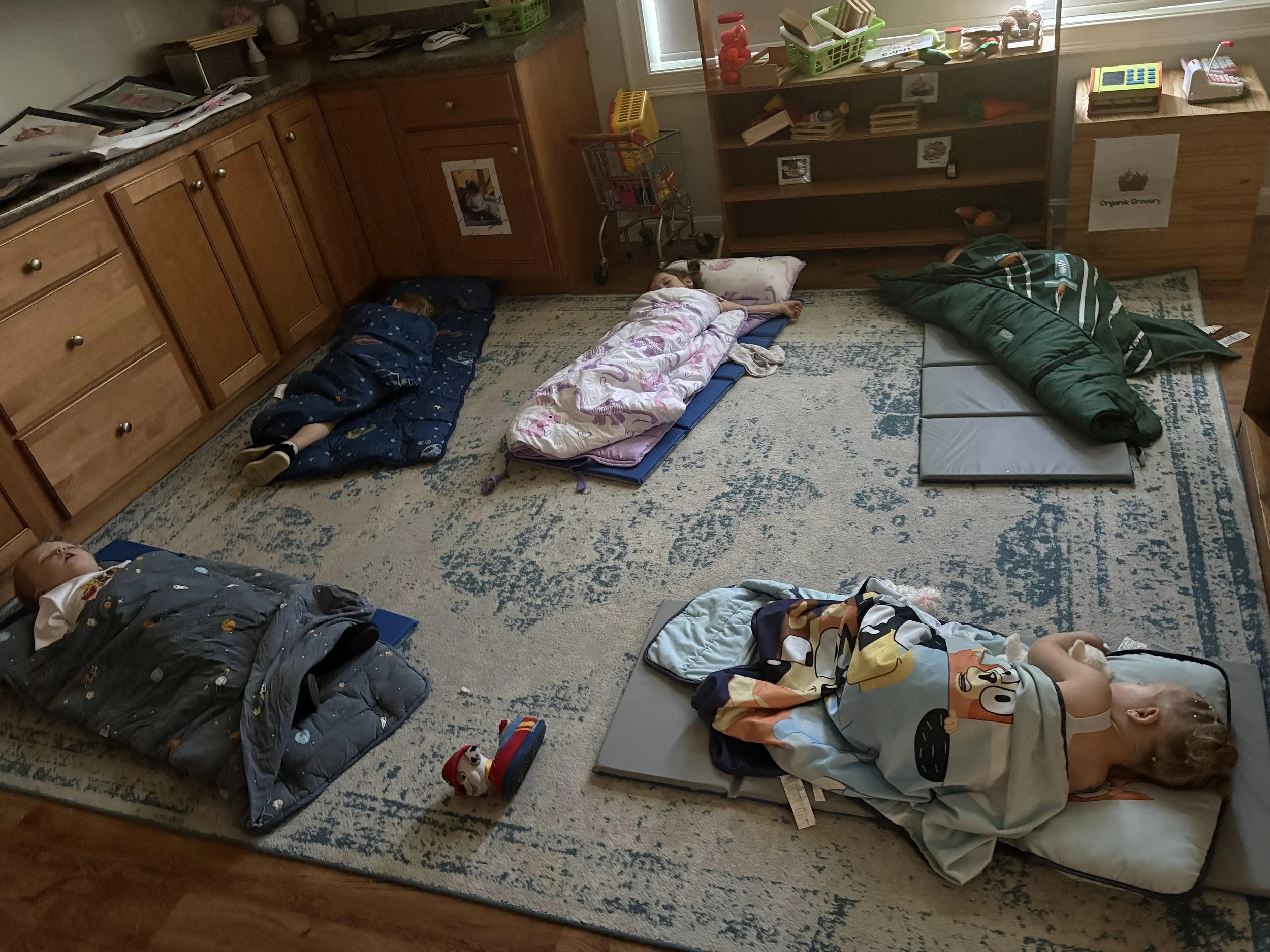
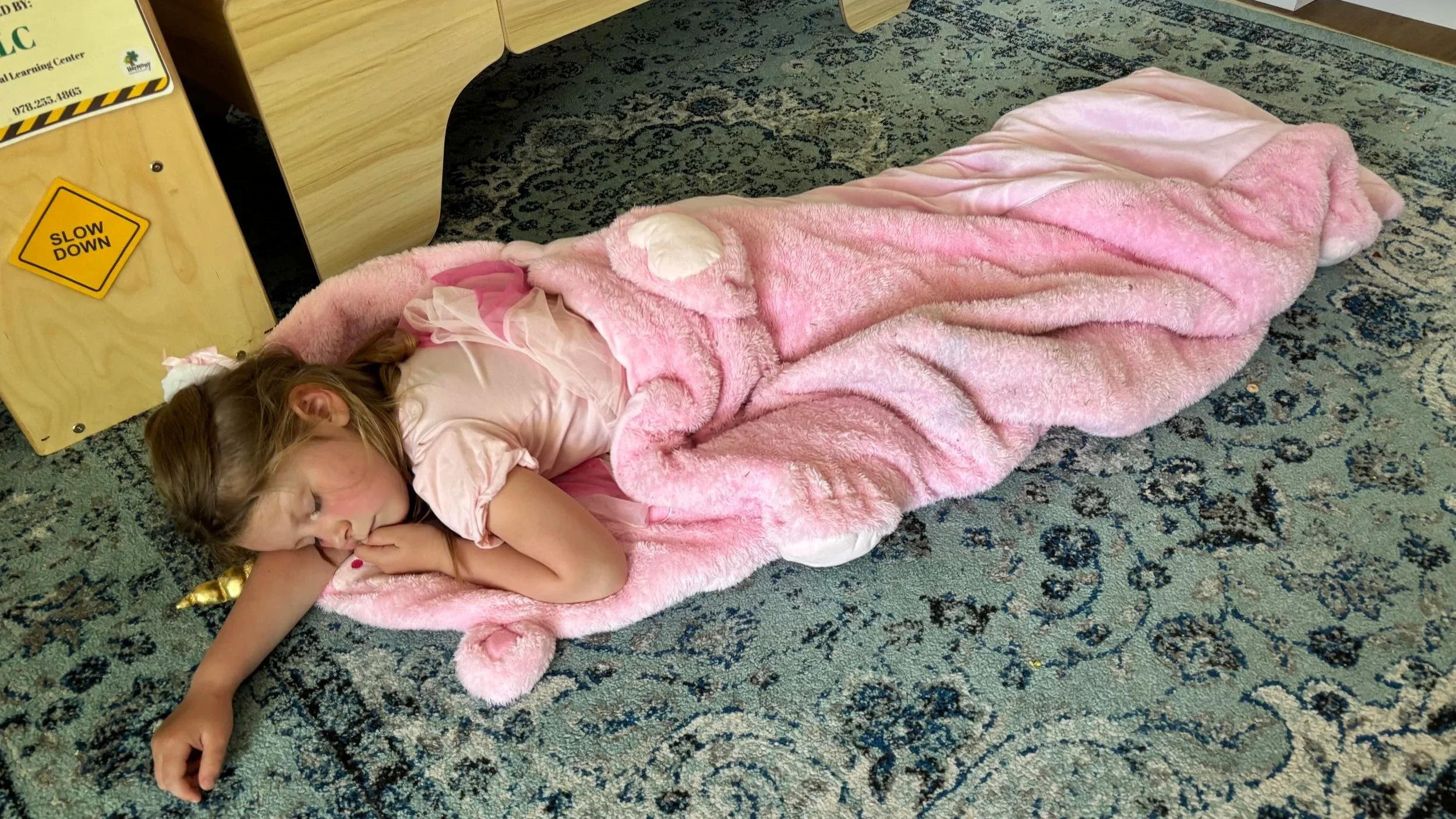
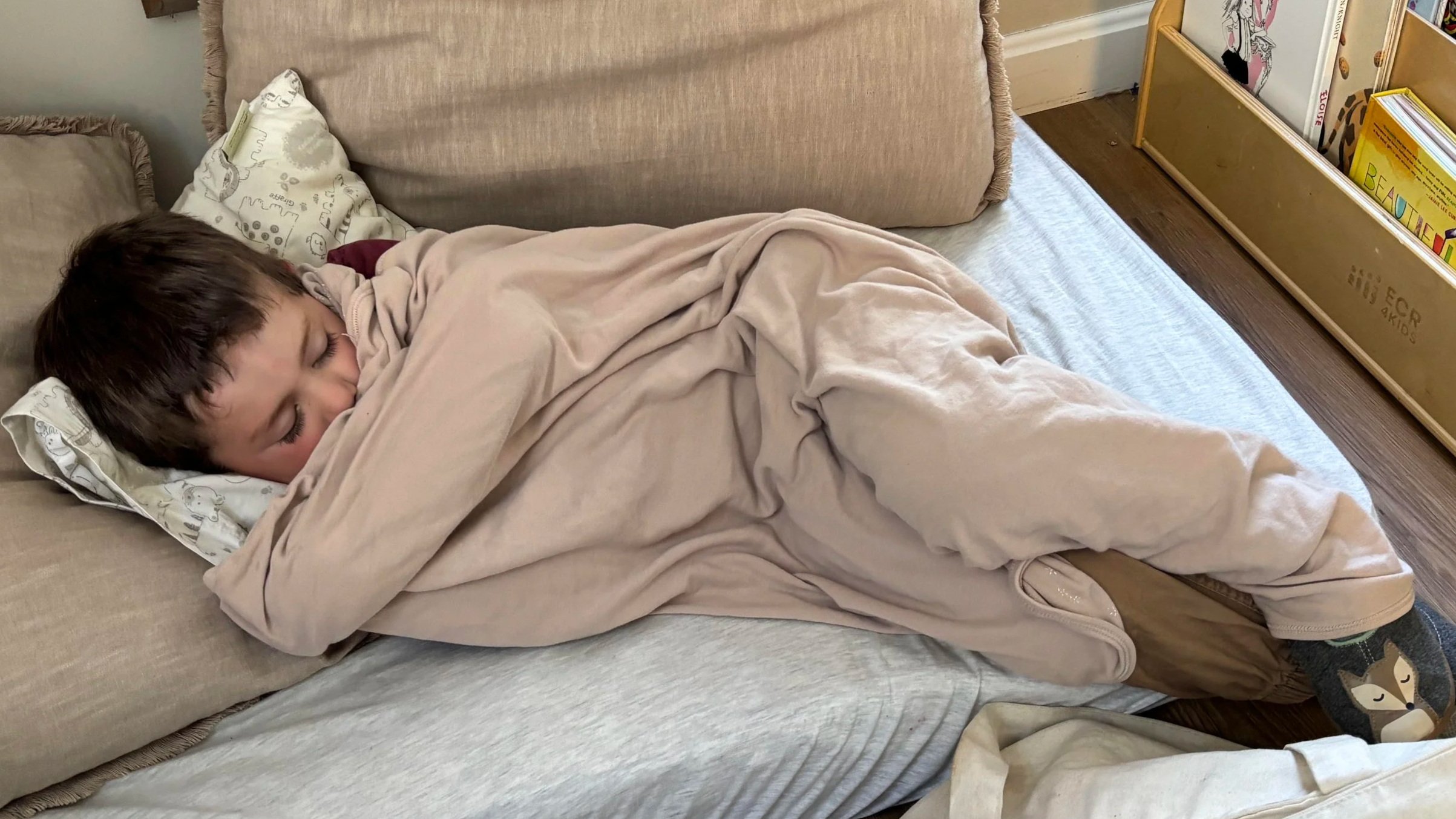
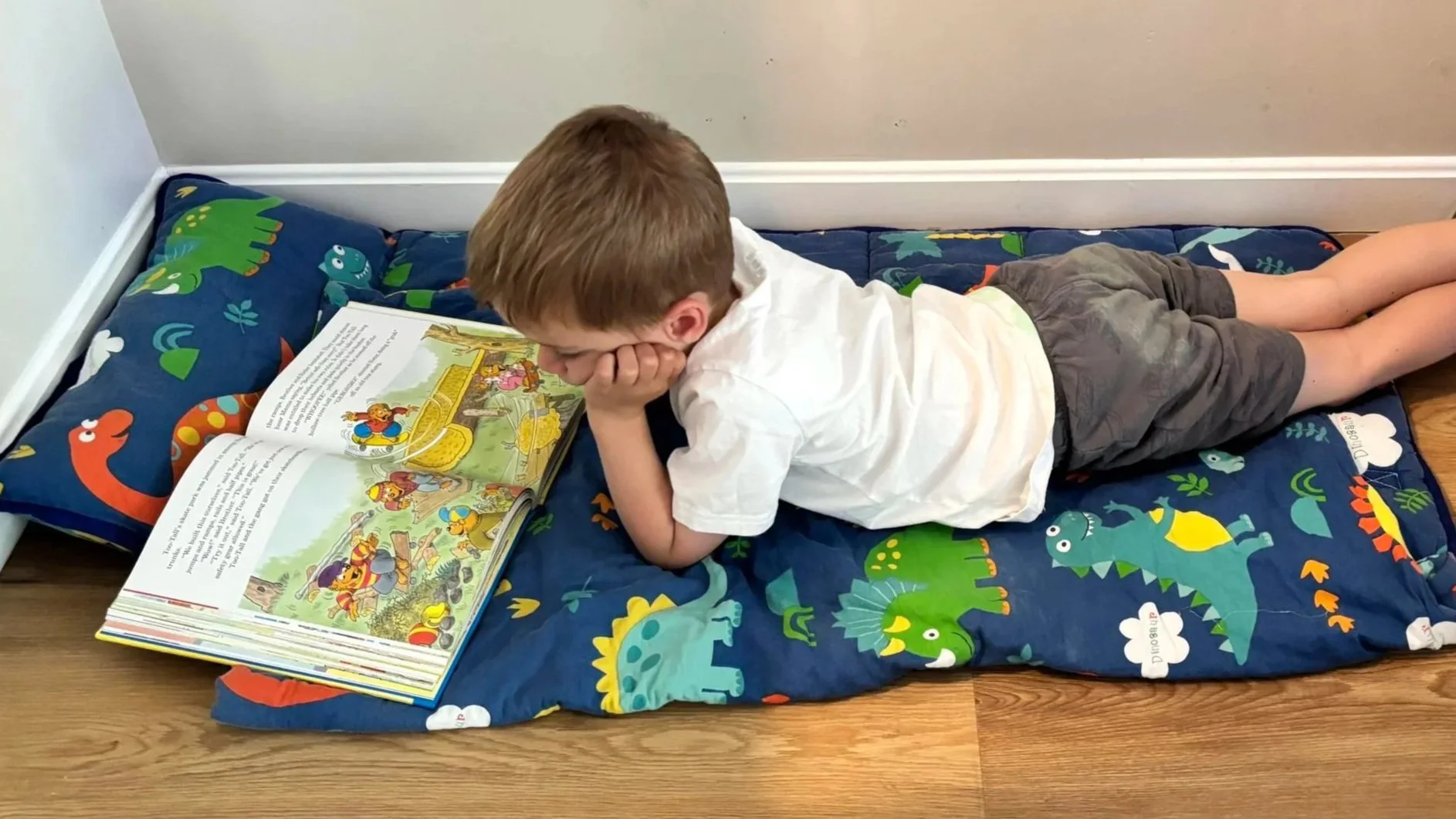
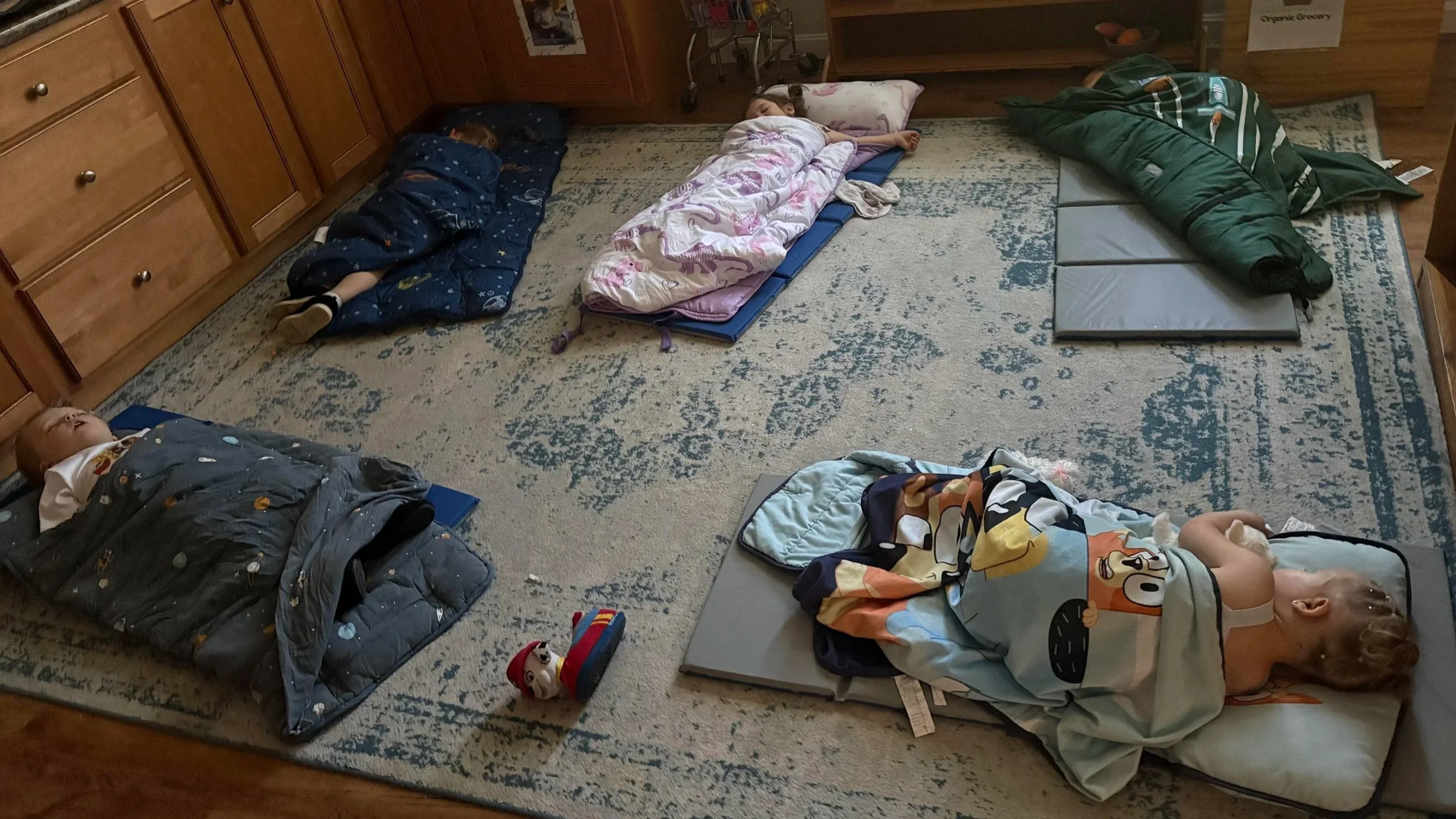
During rest time, we create a calm, predictable environment that invites each child to find repose in the form their individual bodies need. The room is darkened, soft music or white noise (a-la ocean waves) play quietly, and each child snuggles into a personal sleeping bag with a lovey brought from home. Some children quickly fall into a deep sleep, some find sleep slowly, and some rest silently, though awake. Once their classmates are asleep, children who no longer nap—and those who wake after a brief siesta—are offered books, drawing materials, and/or small, calming manipulatives to use independently, while remaining in their own spaces.
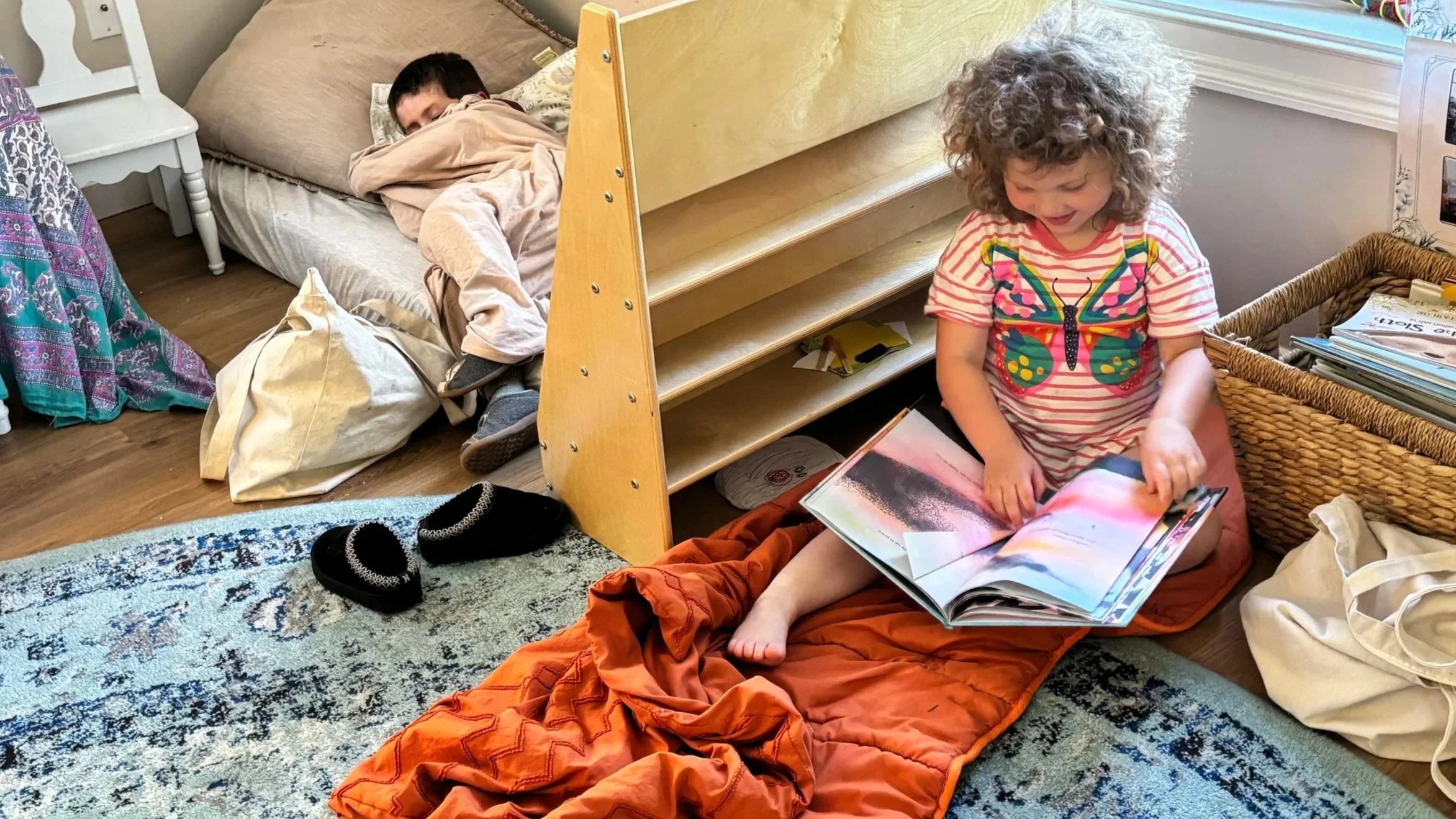
During this important pause in the day, our team is able to document significant moments of the morning, and engage in thoughtful planning as we continue to create meaningful, individualized experiences for each child.
We see children who nap every day, others who occasionally snooze, and still others who remain awake, peacefully relaxing. Whatever form your child’s body chooses for its rest offers benefits. Even wakeful quiet time has been shown to reduce stress and support emotional regulation—after all, it prevents sensory overload, providing children a recharging break from stimulating activities, sights, and sounds.
NIGHT SLEEP AND NAPS
Given that the AASM and AAP sleep recommendations reflect cumulative sleep hours within a 24-hour period, it’s possible that a nap during the day could nudge a child’s bedtime reciprocally later. However, nature may also be a factor.
Studies have shown that children’s circadian rhythms shift later as they grow. “This means that the bedtime your child had at age 2 probably won’t work at age 3, and the bedtime your child had at age 3 probably won’t work at age 4,” according to Dr. Erin Flynn-Evans, Co-Founder of Baby Sleep Science, a physiology-based child sleep organization run by sleep scientists who are also moms. Night sleep issues could be rooted in this biological phenomenon, developmentally normal fears, the common bedtime battles that crop up in the toddler and preschool years, or a blend of all of the above, says Dr. Flynn-Evans—whose background includes over 15 years at the Harvard Medical School's Division of Sleep Medicine.
At Harmony, when we honor rest, we recognize that we are supporting the whole child—not only in the moment, but in long-term growth and well-being. Each nap or peaceful rest allows each child to return to play, friendships, and his or her individual learning with renewed energy and presence.
If your child is struggling at home with sleep, or to meet the daily AASM and AAP sleep recommendations, members of the Harmony team have personally found this Baby Sleep Science Age-By-Stage Sleep Schedules article an excellent resource—along with the rest of the bounty of science-rooted sleep knowledge on their website. (Pro tip: Google your child’s current sleep issue with the words “Baby Sleep Science” to be led directly to their most relevant blog posts for your needs.)
And of course, we are always here to answer any further questions you may have as you move through your Harmony journey with your family!
We’d love to see any Harmony-inspired moments you capture along your child’s early years journey. Tag us (@HarmonyNLC) on Facebook and Instagram, and use hashtags #HarmonyNaturalLearningCenter #TheHarmonyApproach #HarmonyNLC
______________________________
Interested in introducing more of The Harmony Approach to your preschooler at home? Check out Harmony at Home today (FREE activities available).