
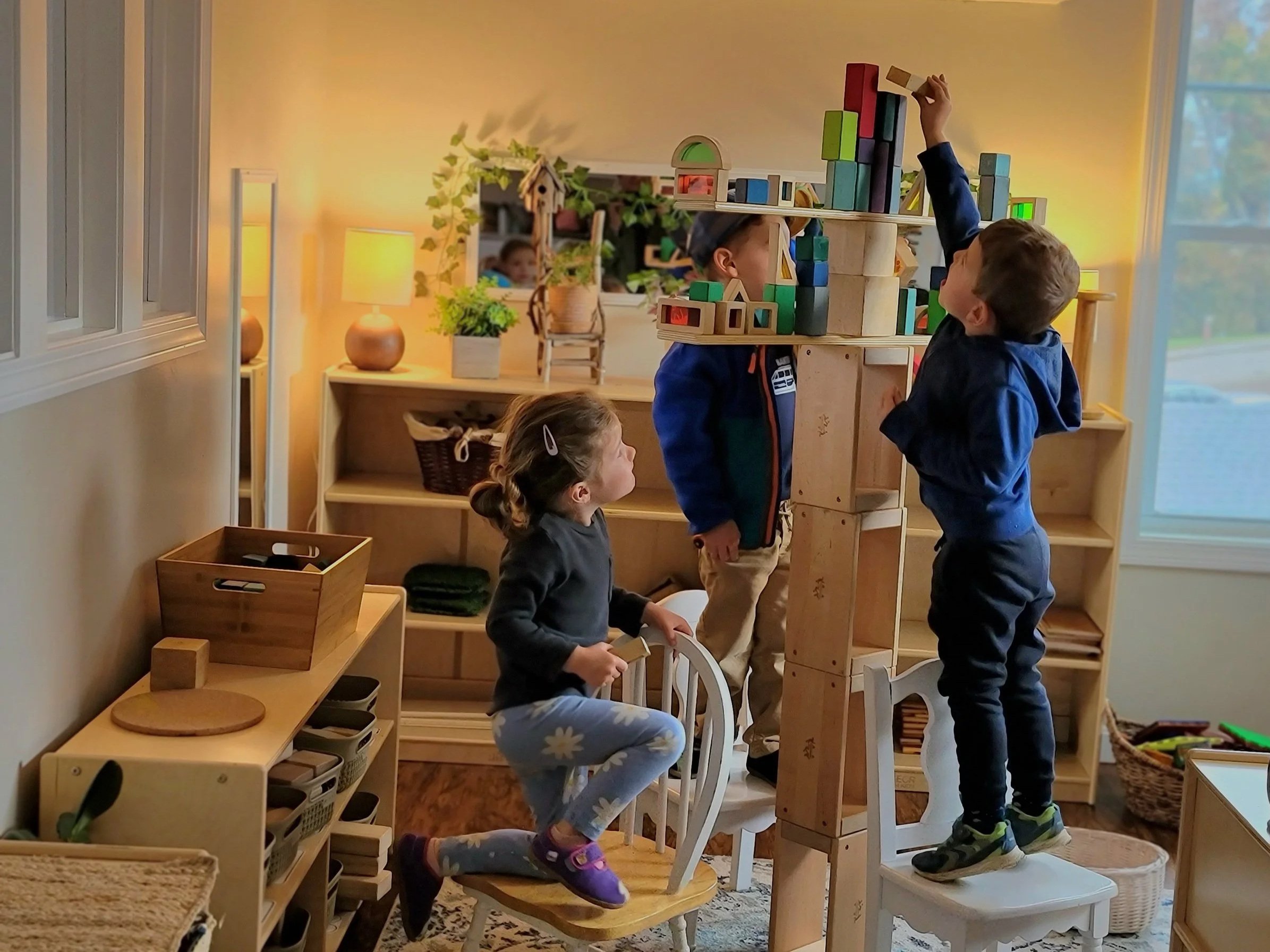
THE HIDDEN LEARNING BEHIND BLOCK BUILDING
A PROFOUND EDUCATION WITHIN BASIC PLAY
Watching young children play with blocks may look like simple, classic play on the surface.
But as children stack, balance, and create structures, they are doing so much more than playing—they are developing foundational skills to support growth across every area of learning.
At Harmony, we recognize that block play is one of the most valuable experiences we can offer young children—and that our block areas are actually spaces of discovery, imagination, collaboration, problem-solving, and storytelling, where a rich, complicated education unfolds in real time.
Sound too good to be true? We promise you—it isn’t!
As blocks are stacked, they are transformed from static cubes of wood into plans, stories, inventions, and solutions to problems encountered along the way.
Through block play, children are not only building structures, they are building confidence, relationships, persistence, and a lifelong love of learning.
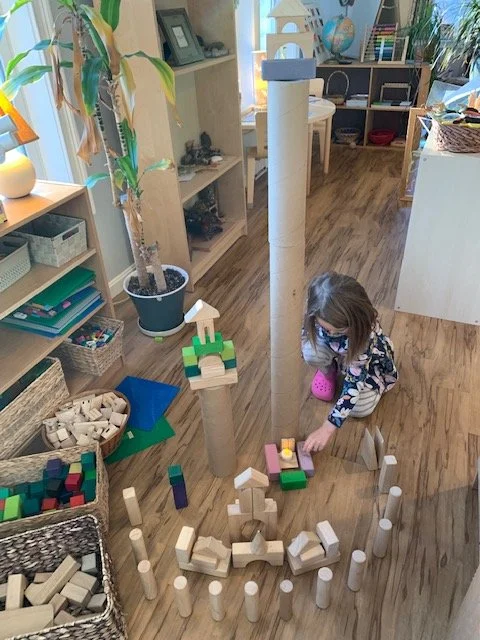
SKILLS HONED THROUGH BLOCK PLAY
Let’s take a moment to walk through the extraordinary, complex skills children acquire as they work with basic blocks.
Creativity & Critical Thinking
Open-ended play materials invite endless possibilities. No two structures are ever the same because no two children think exactly the same way. Block play encourages children to imagine, innovate, test ideas, and think flexibly as they work through challenges.
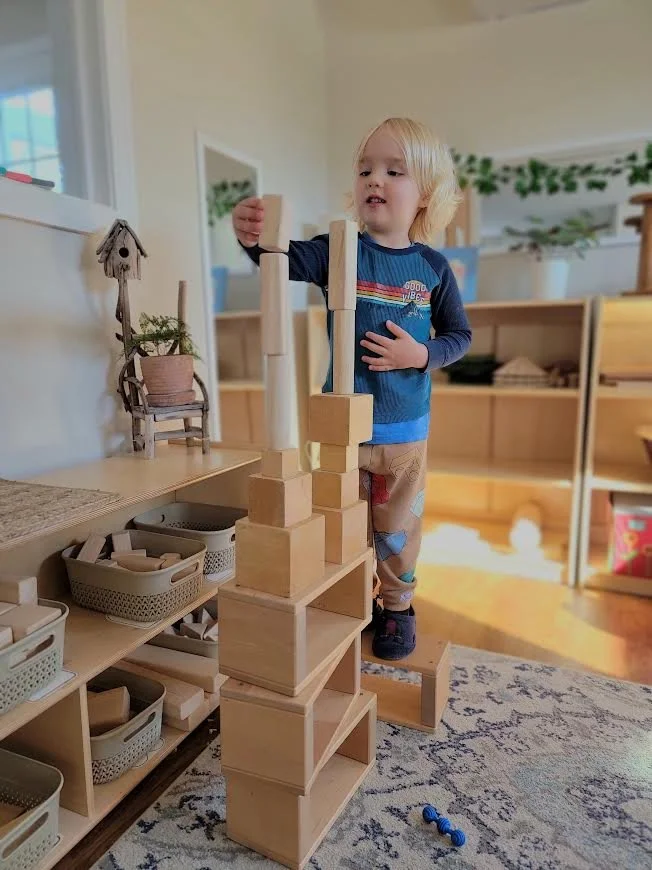
Math & Engineering
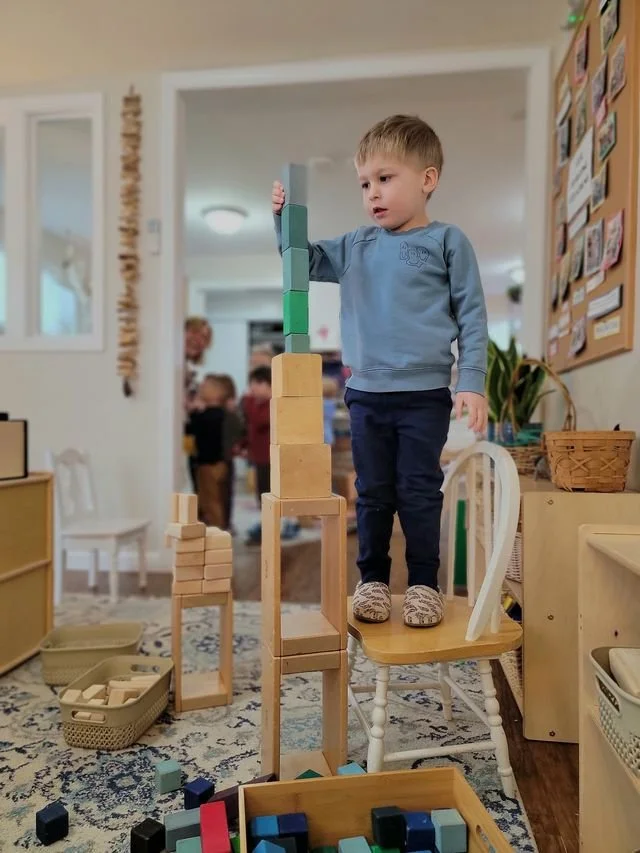
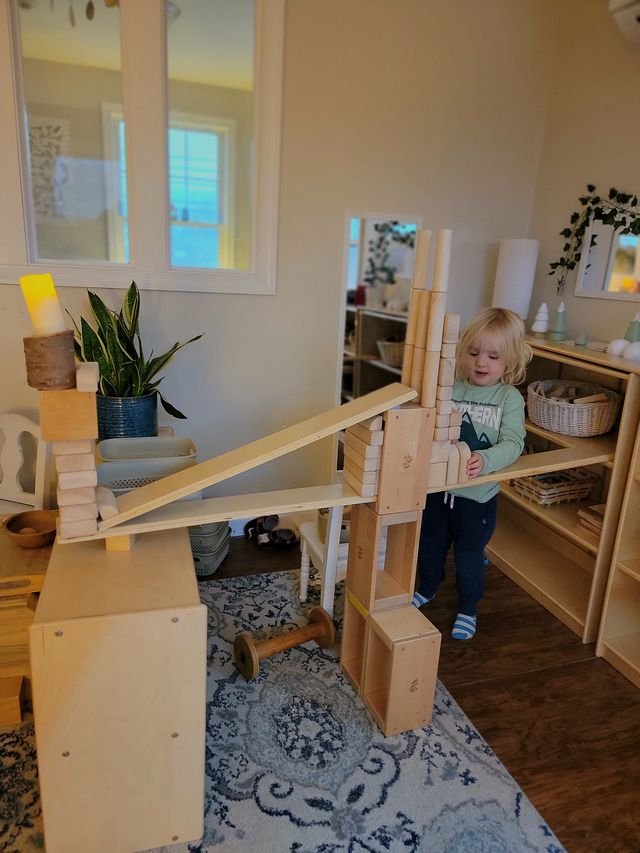
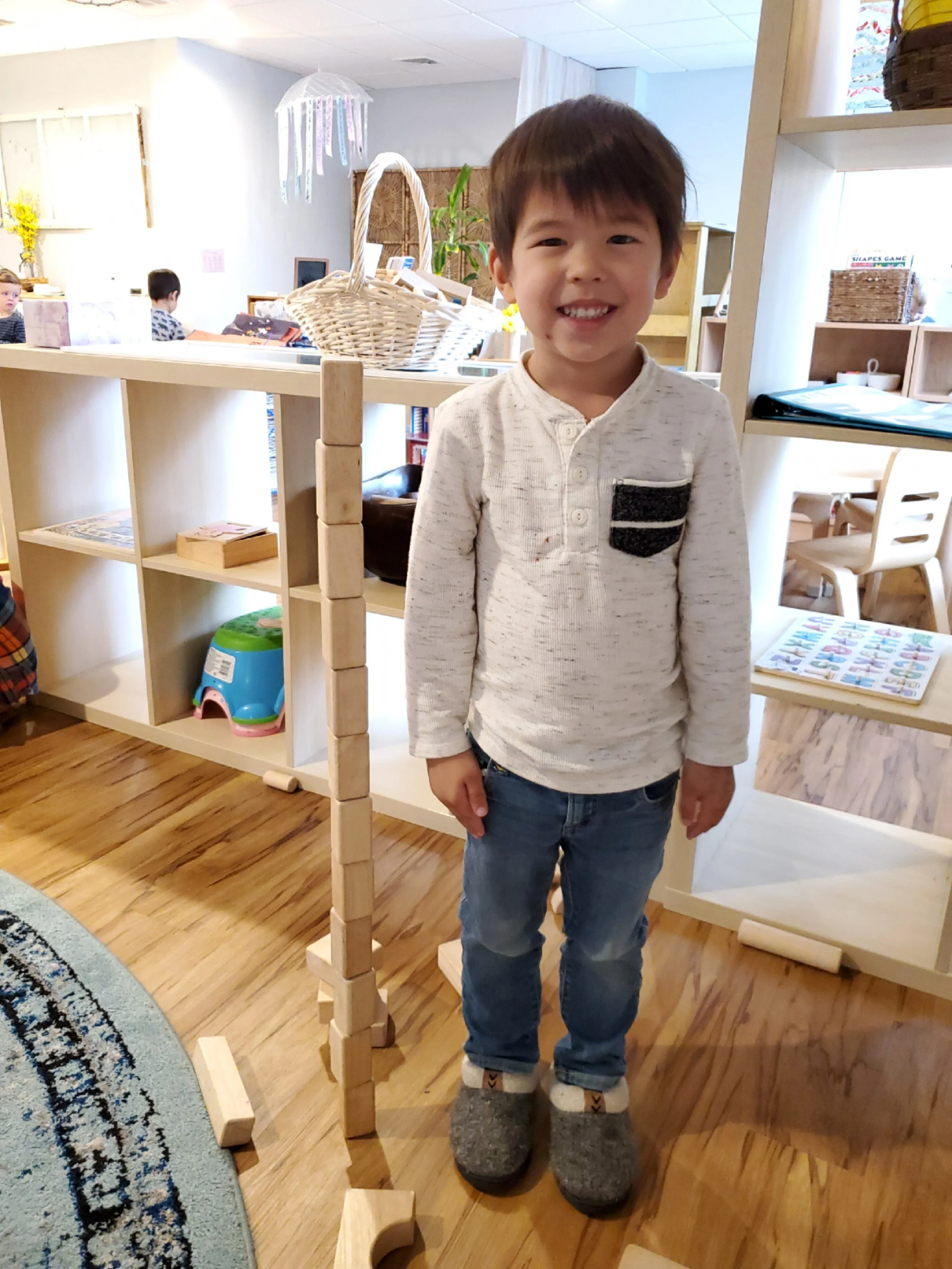
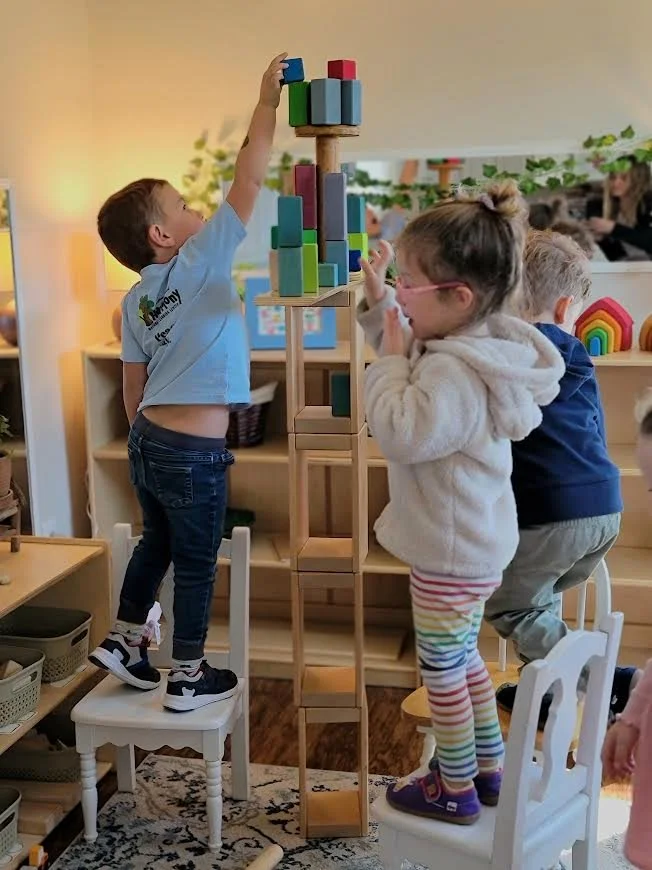
Counting, measuring, sorting, balancing, patterning, and spatial awareness are natural facets of block play. Children experiment with height, symmetry, weight, and stability as they test ideas and revise their structures. Early engineering skills emerge as children discover what makes a tower strong, how to create bridges, and how to keep a structure from wobbling or falling.
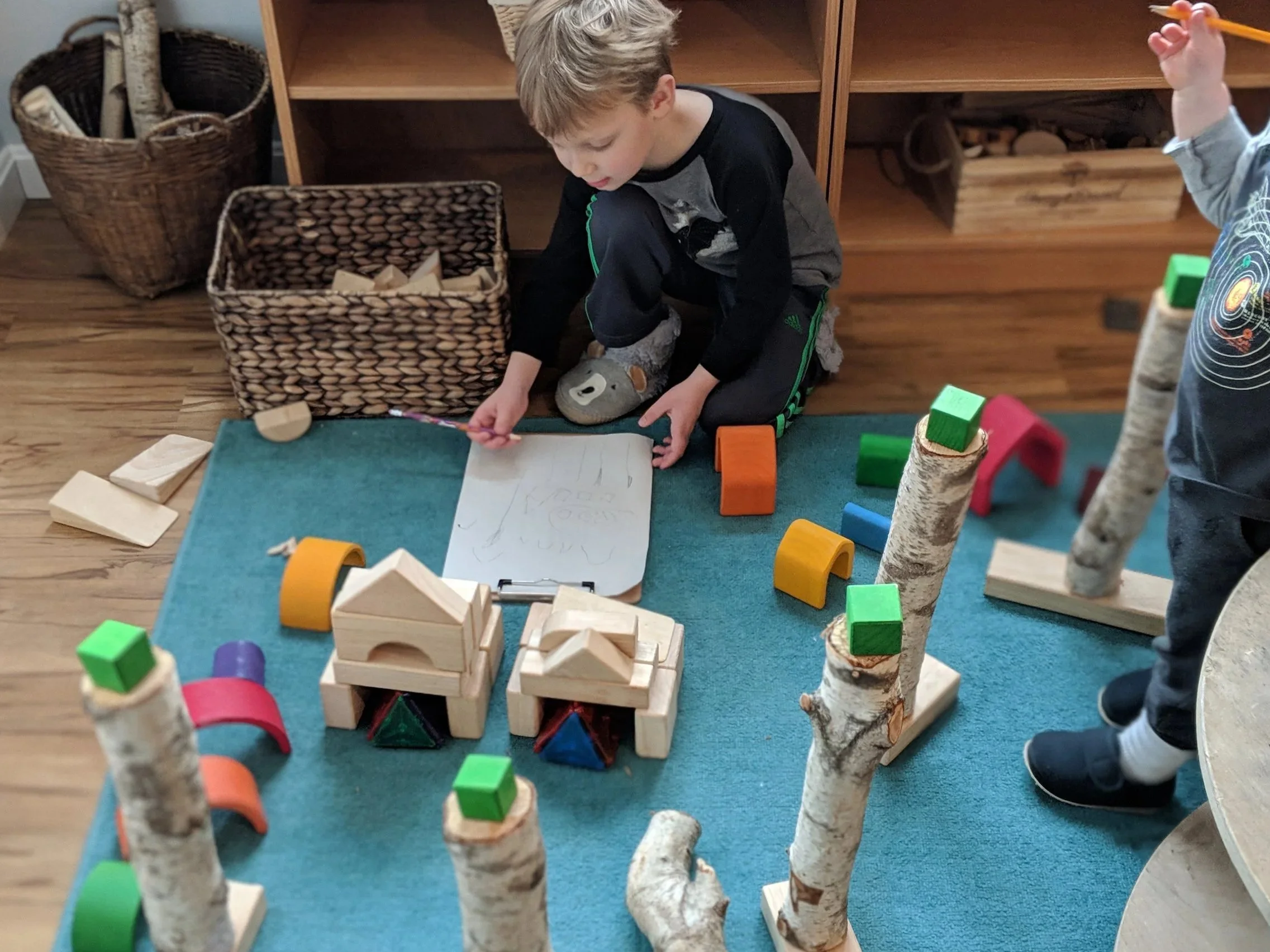
Language Development
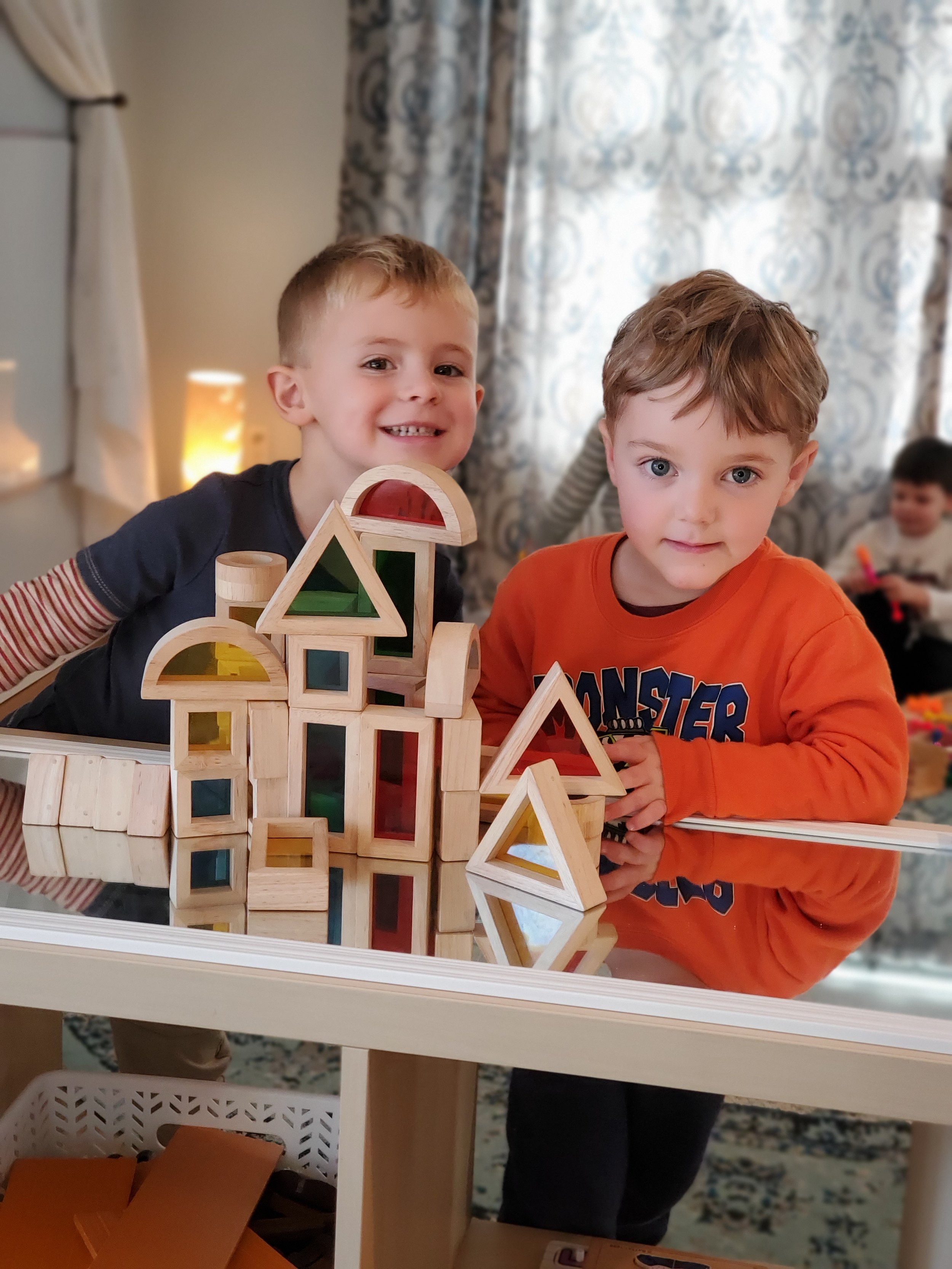
As children build, they almost always tell stories.
They describe their structures, explain their plans, create imaginative scenarios, and expand their vocabulary in meaningful ways.
Our teachers support this language growth through thoughtful conversation and open-ended questions that encourage children to reflect and elaborate.
Social Skills
Some of the richest peer interactions in an early childhood classroom happen during block building.
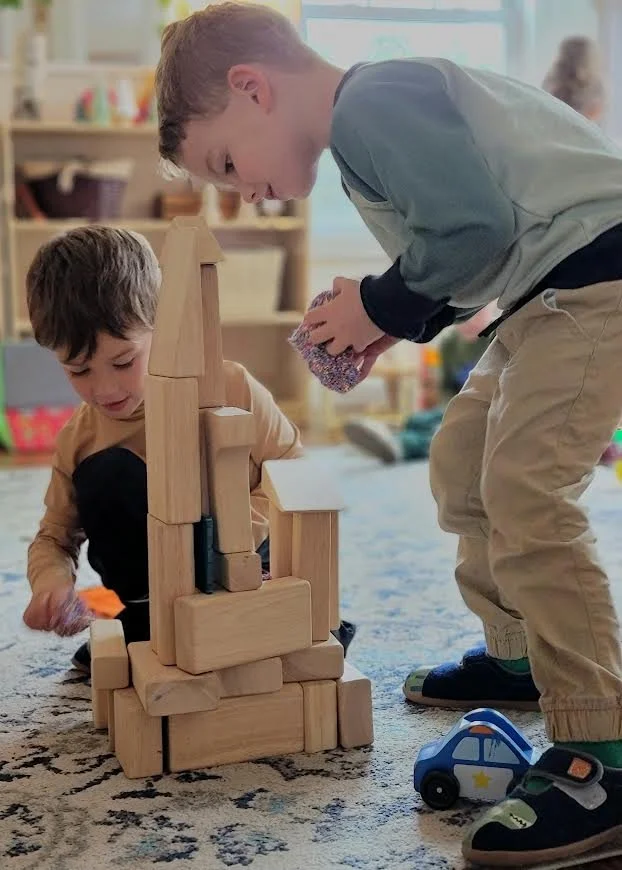
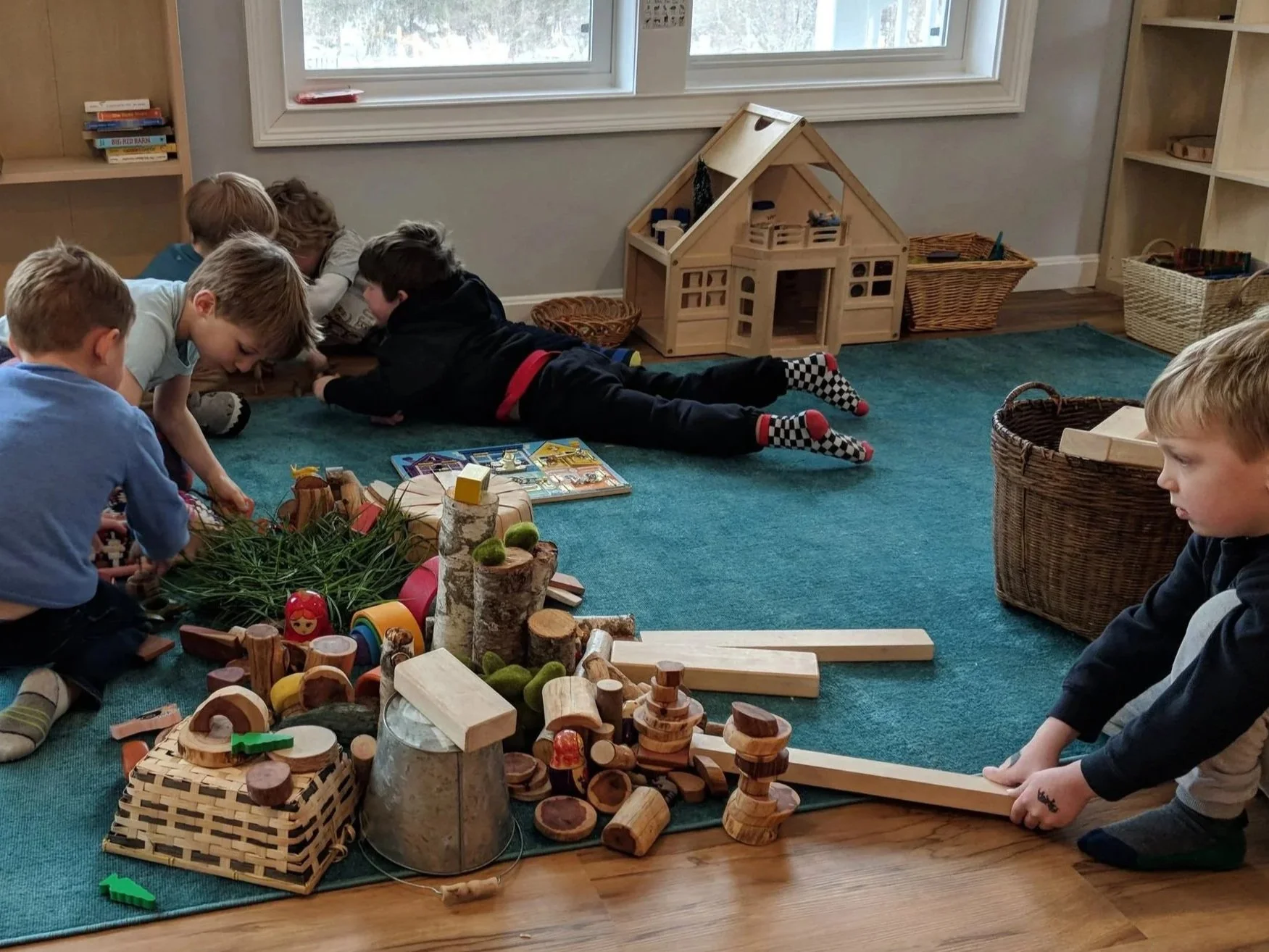
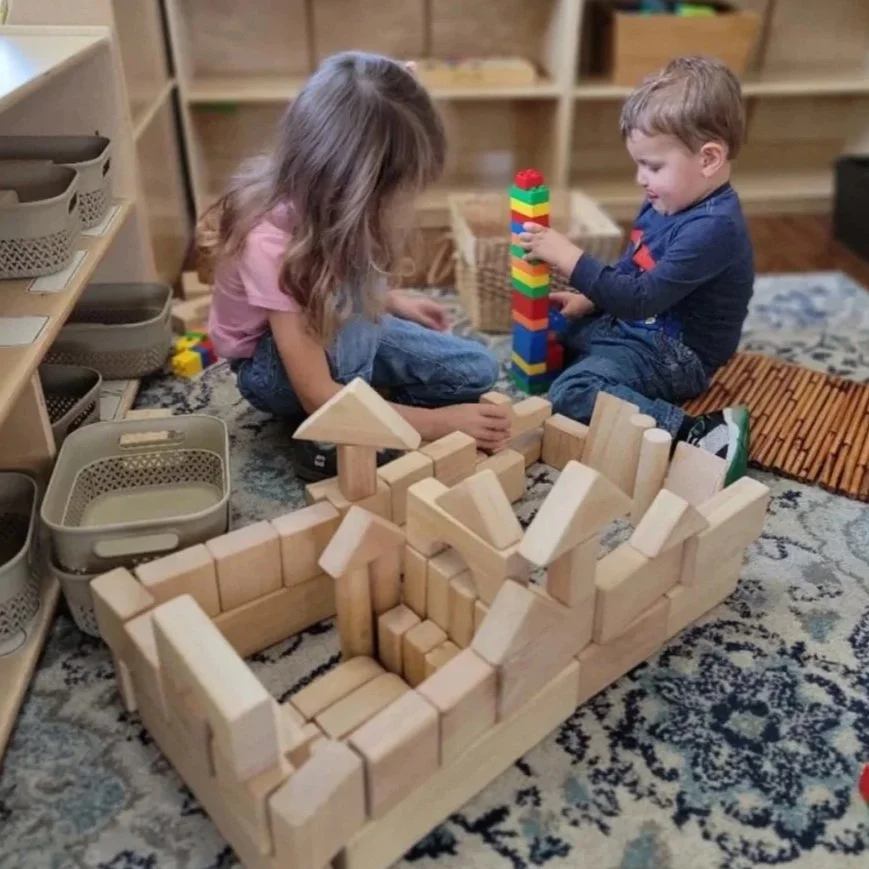
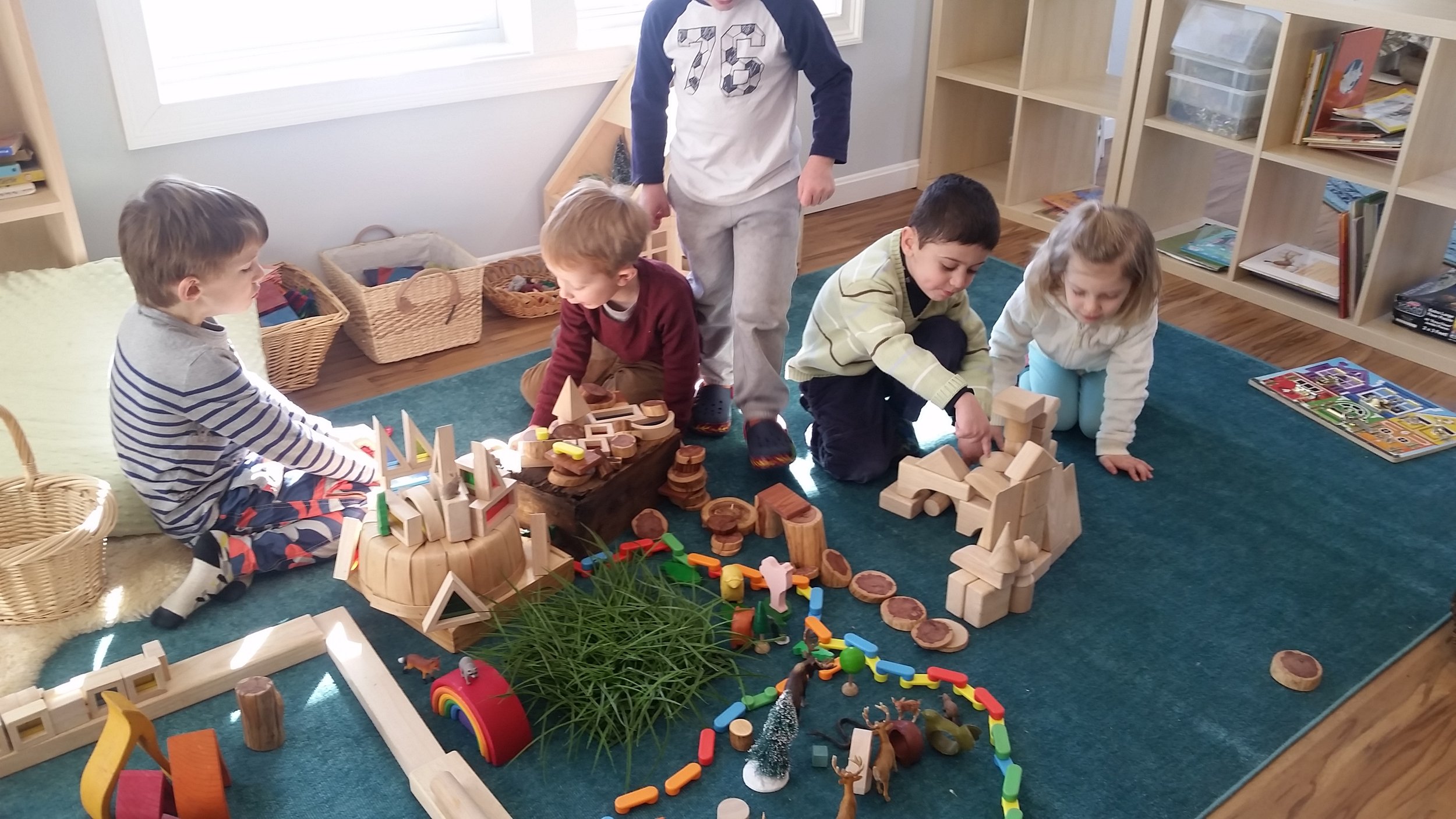
By nature, the block area is deeply social. Children share materials, negotiate space, collaborate on plans, and solve problems together. They listen to each other’s ideas, compromise and work toward shared goals.
Emotional Self-Regulation
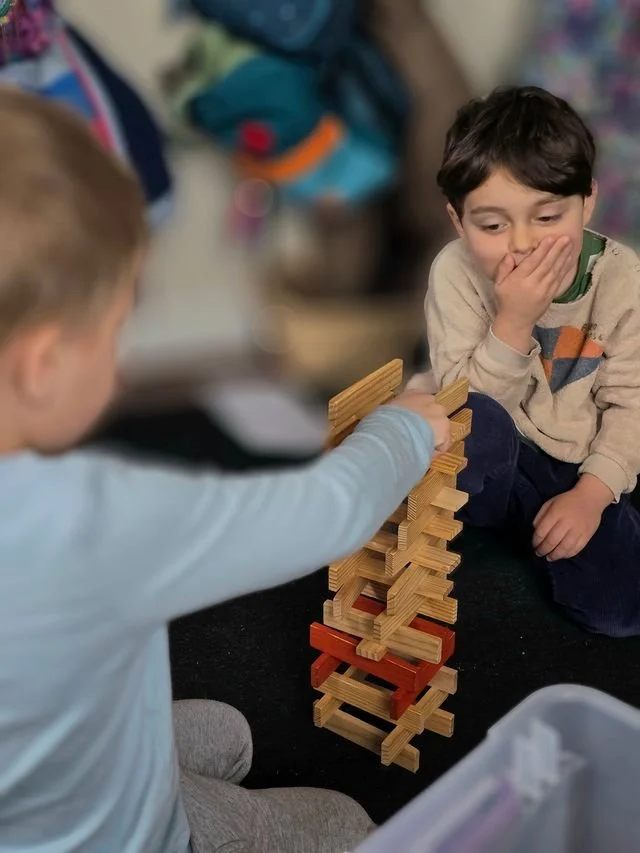
As they test ideas, revise unstable structures, rebuild after the disappointment of a tower crumble, persist through frustration, and experience the joy of finally reaching their (often unspoken) goals, children are developing and strengthening emotional self-regulation skills and perseverance.
LONG, UNINTERRUPTED PLAYTIME MATTERS
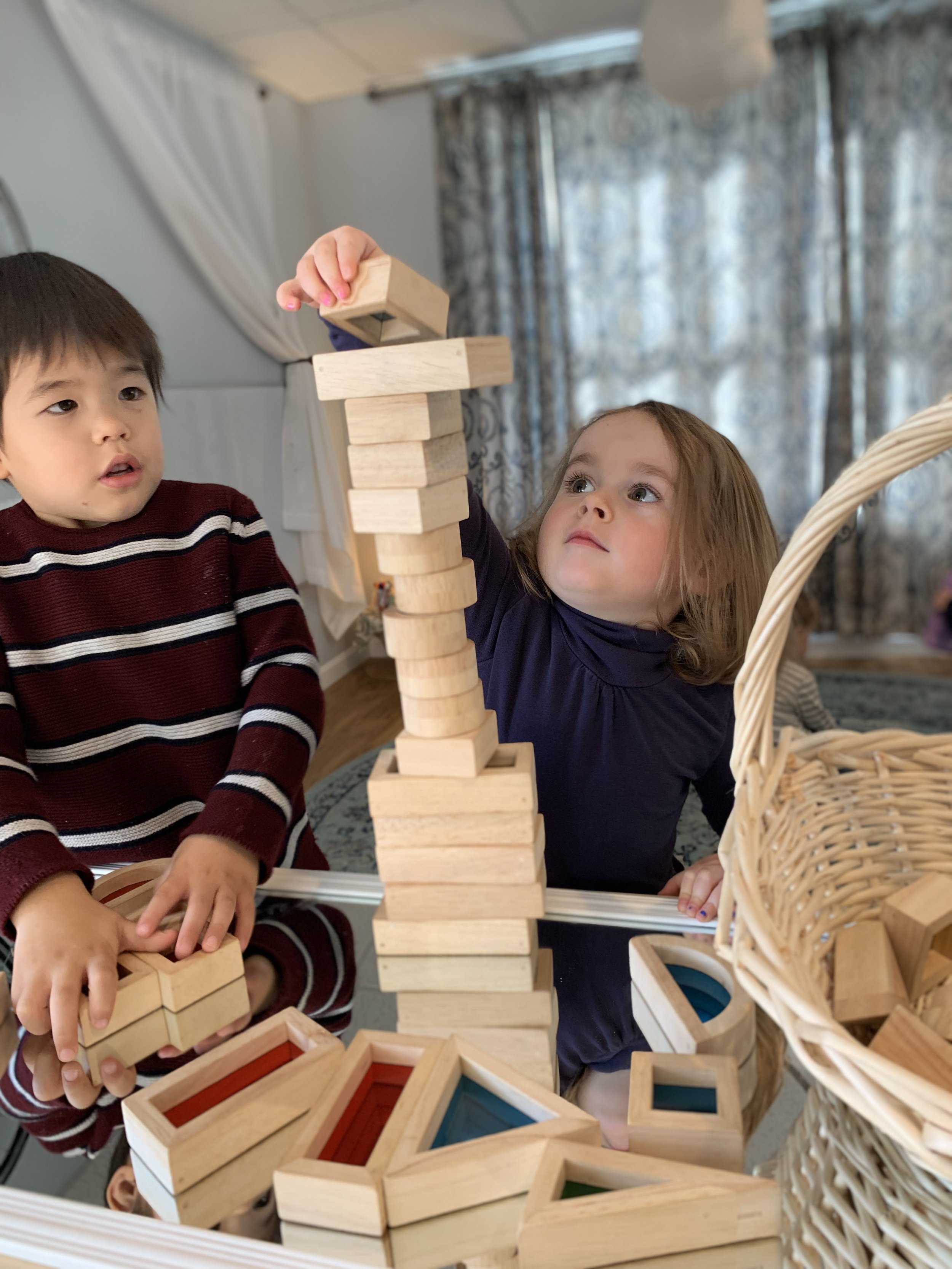
Achieving the many types of deep learning described above requires uninterrupted time. A meaningful structure rarely appears in just a few minutes.
When children have extended, continuous time to play, their ideas have the opportunity to grow and evolve. Long stretches of play allow children to settle into concentration, follow their curiosities, and create something far more complex than they may have originally imagined. What emerges is not merely a structure, but confidence, resilience, cooperation, and independent thinking.
This is the learning that happens when we protect play instead of rushing it.
THE INTENTIONALITY BEHIND
OUR BLOCK CENTERS
In each Harmony classroom, the block area is a place children return to again and again. This repetition is so important. Revisiting ideas strengthens comprehension, builds confidence, and allows deeper cognitive connections to form over time.
Understanding this, we intentionally create each block area to:
Support Independence
Our building materials are thoughtfully organized and clearly labeled with both pictures and words so children can independently select and return items. This sense of ownership and responsibility is key to their learning process.
Set the Stage for Inspiration
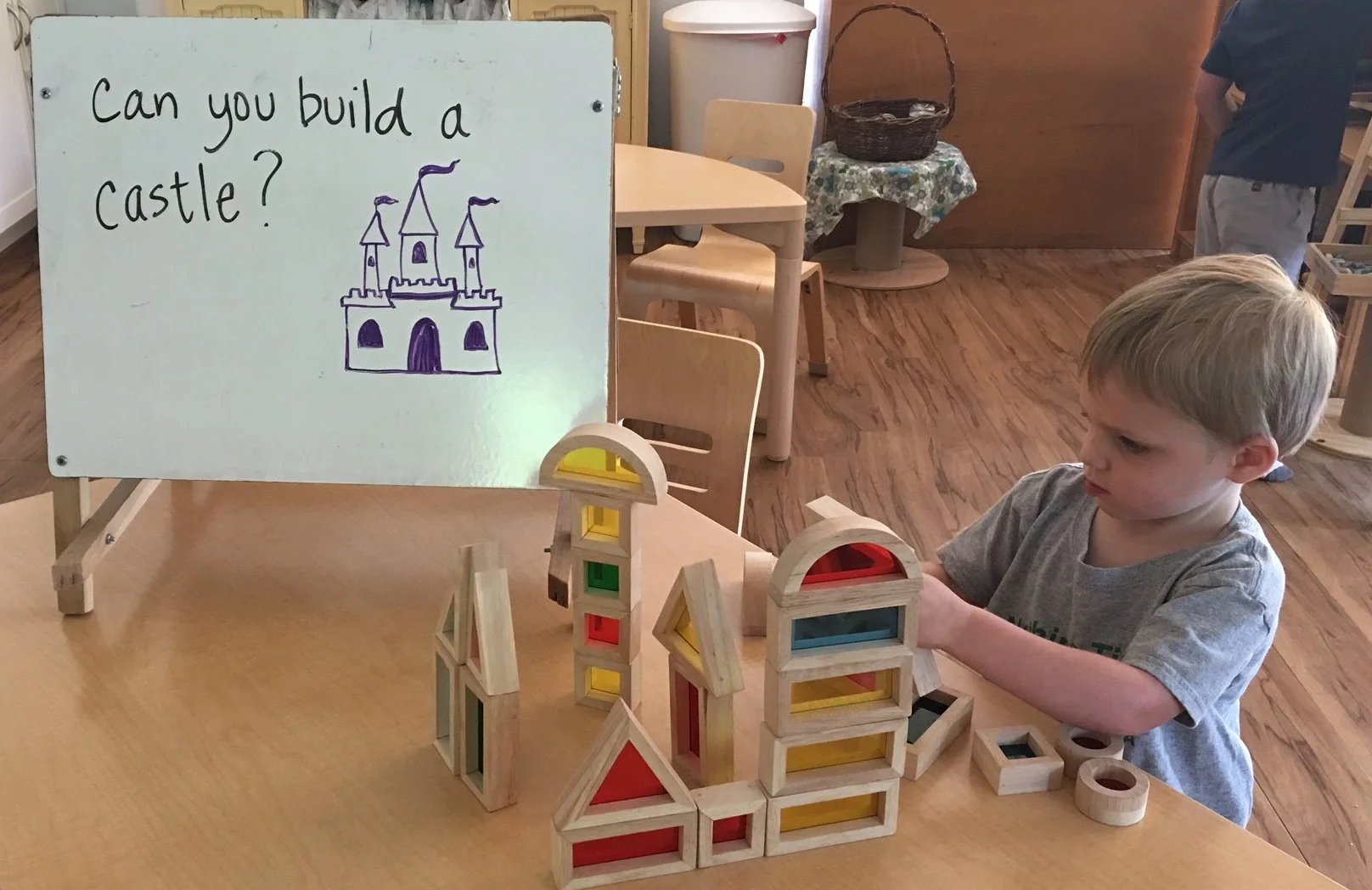
To spark curiosity each morning, teachers may set out a play invitation or provocation—a question to consider, a basket of unusual materials, photographs of real-world structures, or an intentional arrangement of items that encourage exploration and new ideas.
Vary Materials
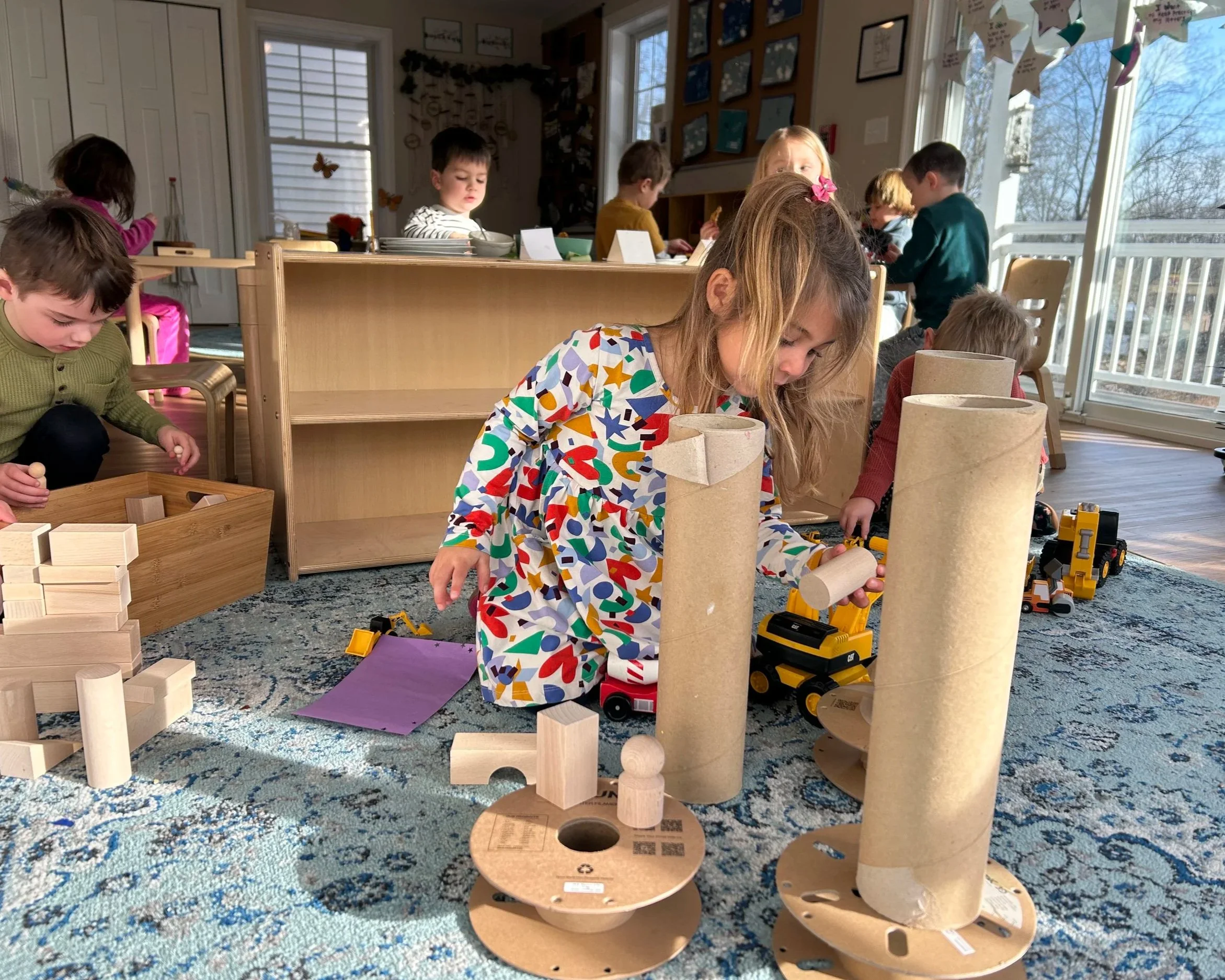
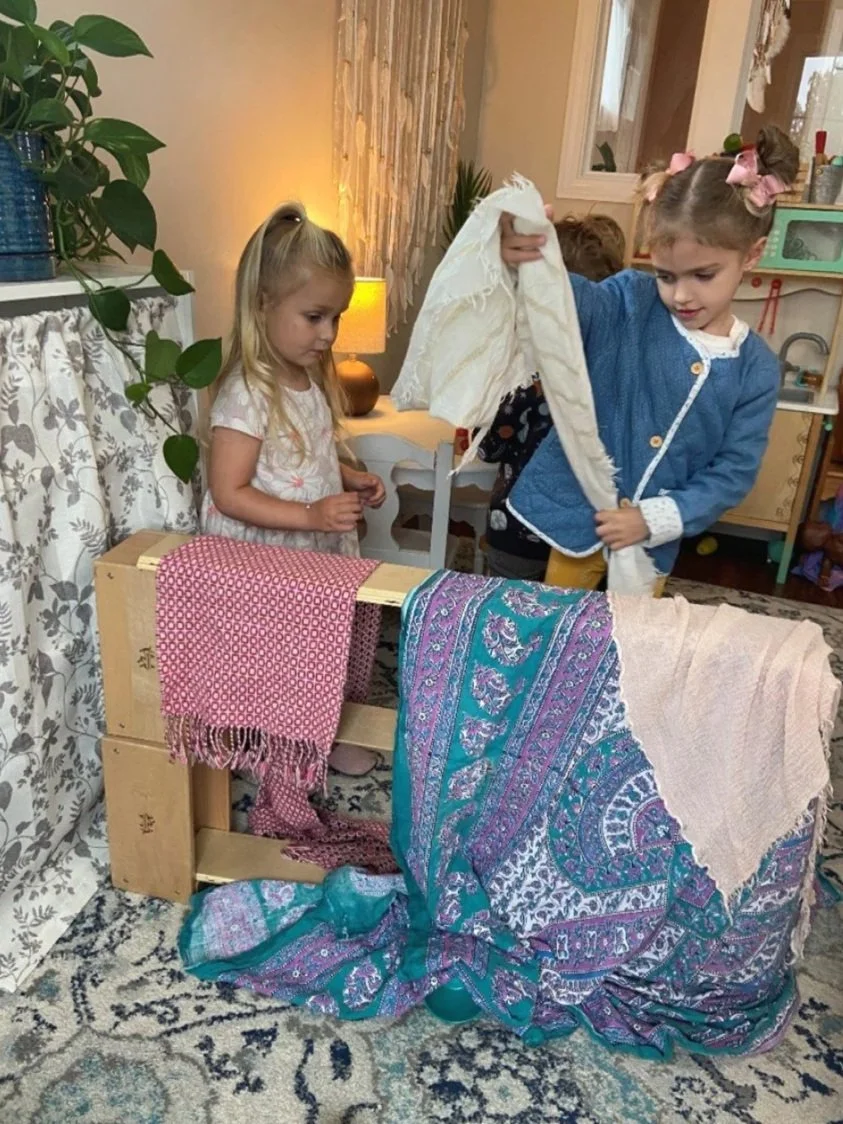
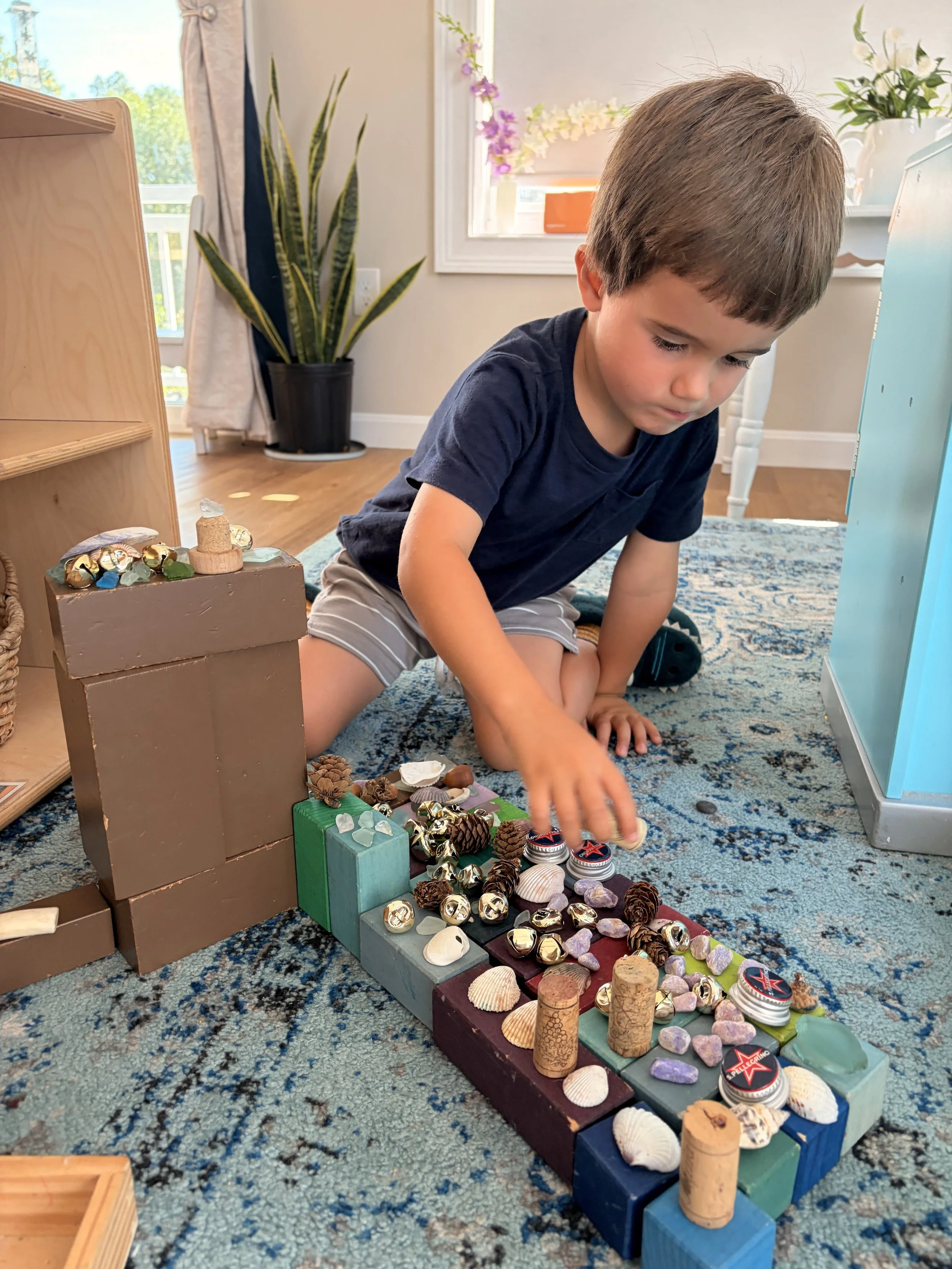
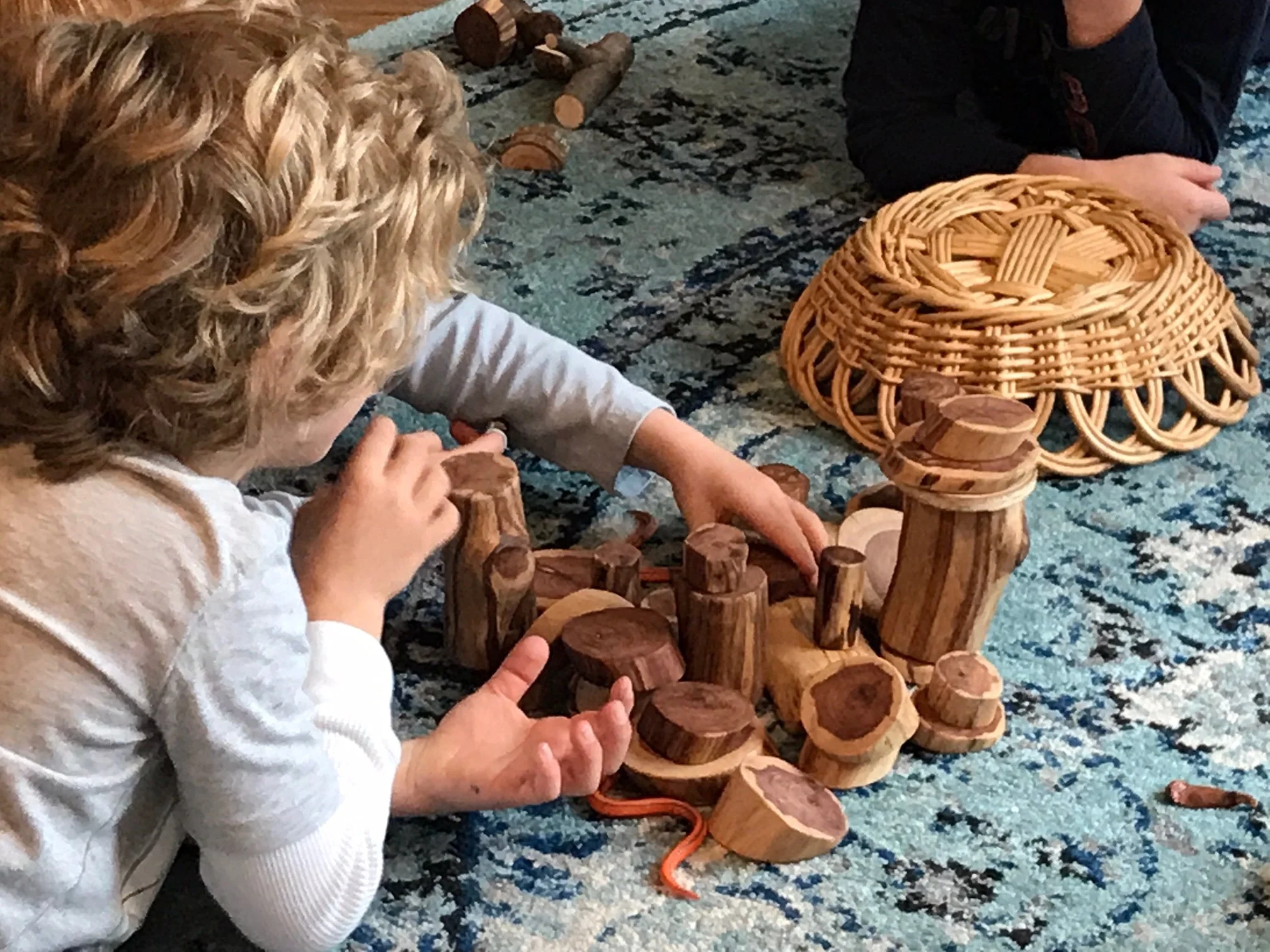
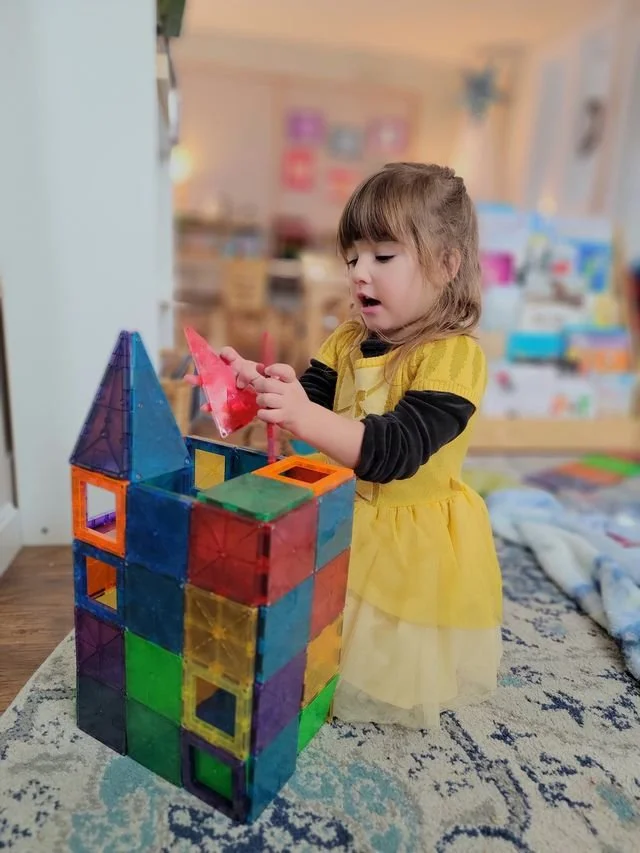
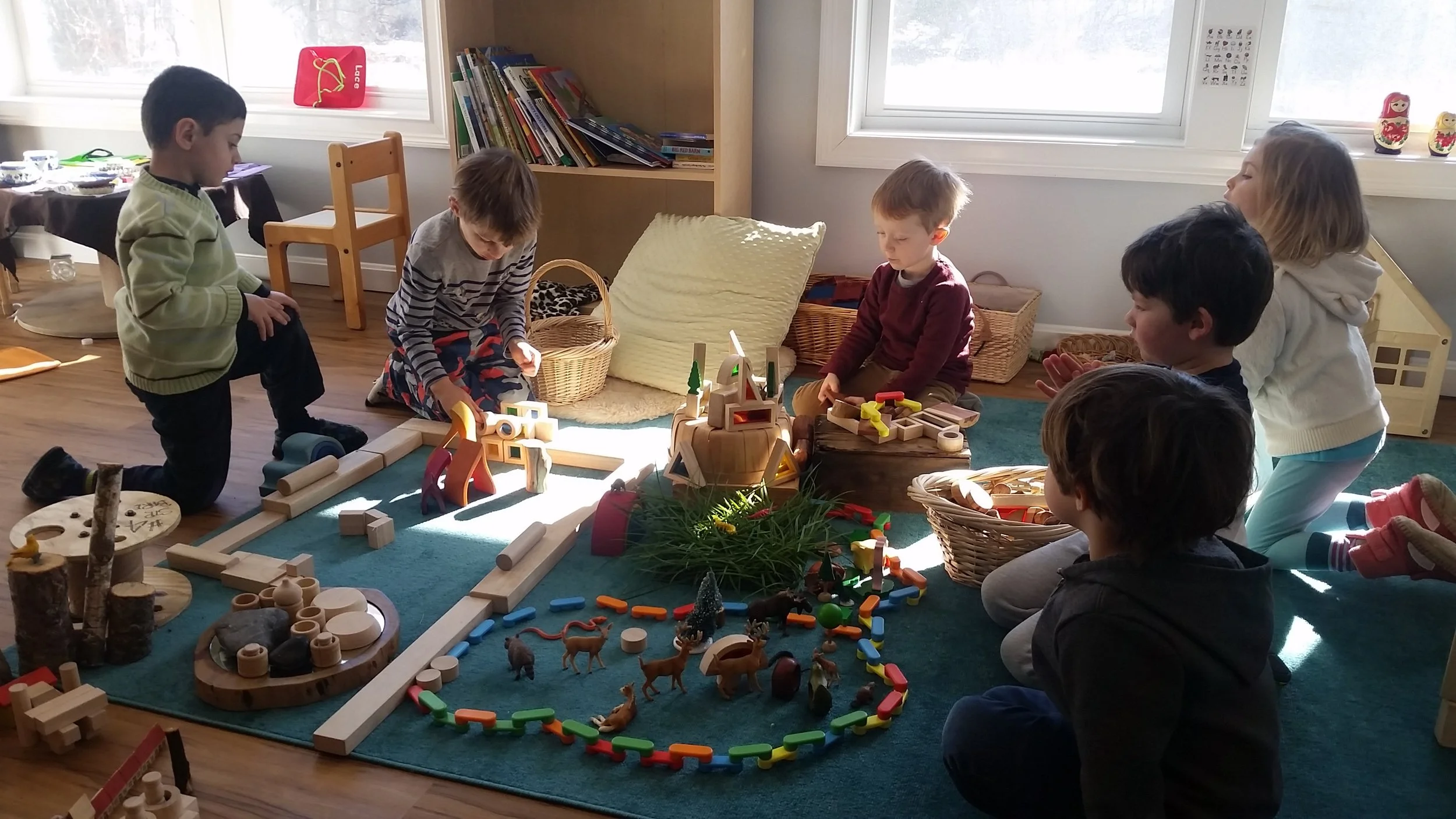
In addition to traditional wooden blocks, we offer magnetic tiles, natural stones, cardboard tubes, tree cookies, fabric, recycled items, and “loose parts” collected from nature. Each material inspires children to engage in different kinds of creative work and discovery.
Choose Language Carefully
Our choice of words with children has enormous impact. To honor their individual thinking and innovation, we avoid emphasizing the final product of the project by asking what they are making. Instead, we intentionally focus on the creative process with comments and questions like: “Tell me about what you’re building…I noticed you changed your plan when your tower fell…How did you decide where those pieces would go?...I noticed you both worked together to solve that problem.”
Preserve
and Document
Children’s Work
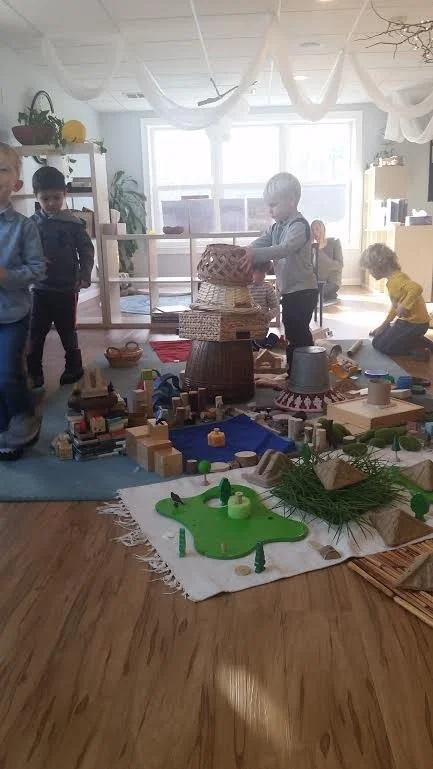
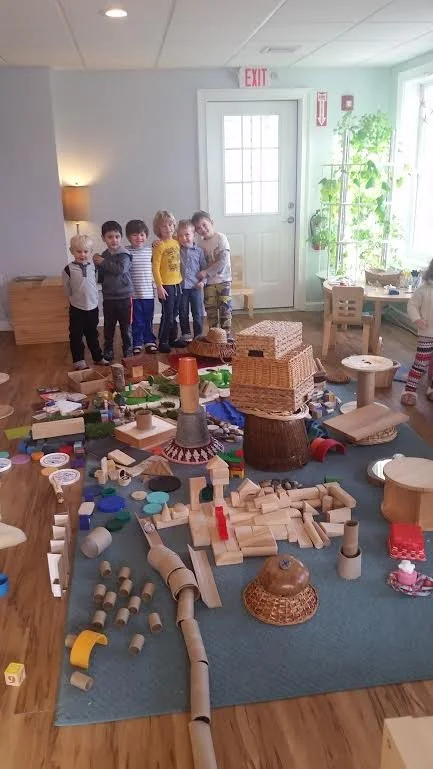
Whenever possible, our team leaves collaborative building structures intact so children can return and add to them over multiple days.
If we must take down a creation, we always try to photograph it first—both to honor the children’s work together and preserve the story of their shared experience.
BLOCK PLAY AT HOME
If you’d like to extend this strengthening of math, engineering, storytelling, emotional self-regulation, creative problem-solving, critical thinking, language development, and social skill-building to your home, you can easily do so!
Create your own play invitations—items intentionally set out in an area where you know your child will discover them and begin to explore—using any of the materials described above, or vary them with items at home like cardboard boxes, wooden spoons, measuring cups, couch cushions, recyclables, items collected in nature…or whatever interests you and your child.
Simple, open-ended materials inspire the richest play, and tend to lead to the most lasting learning retention.
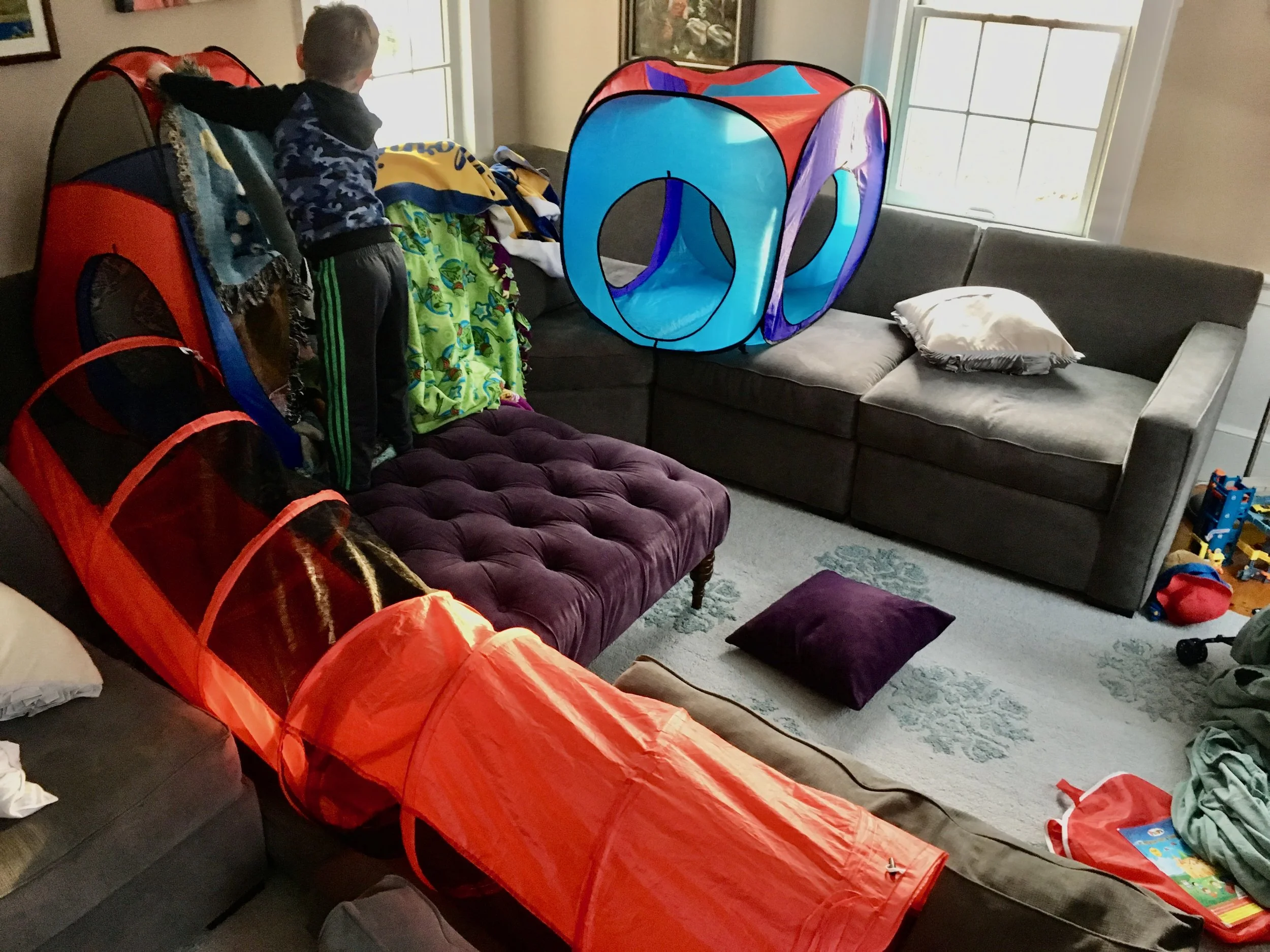
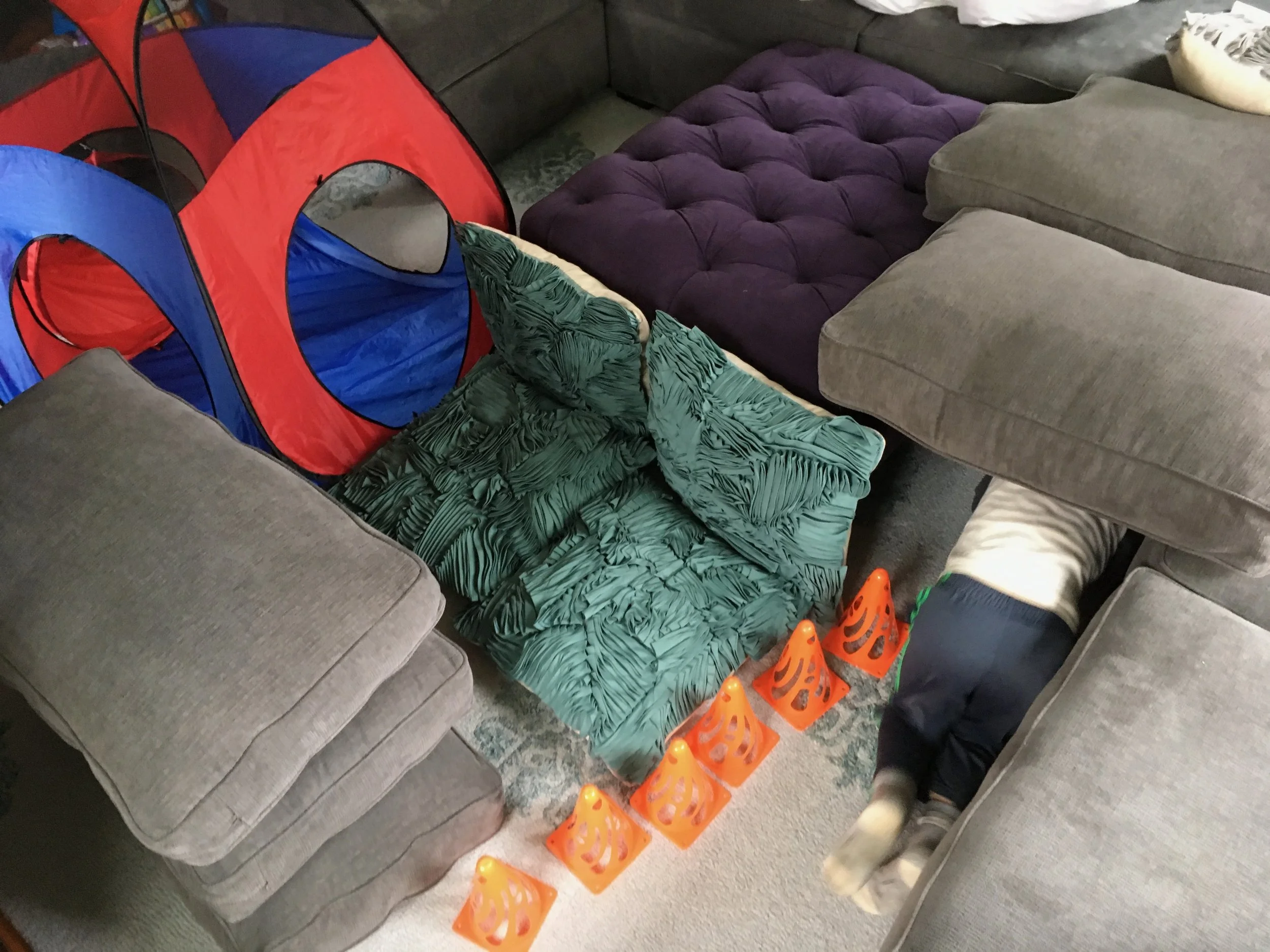
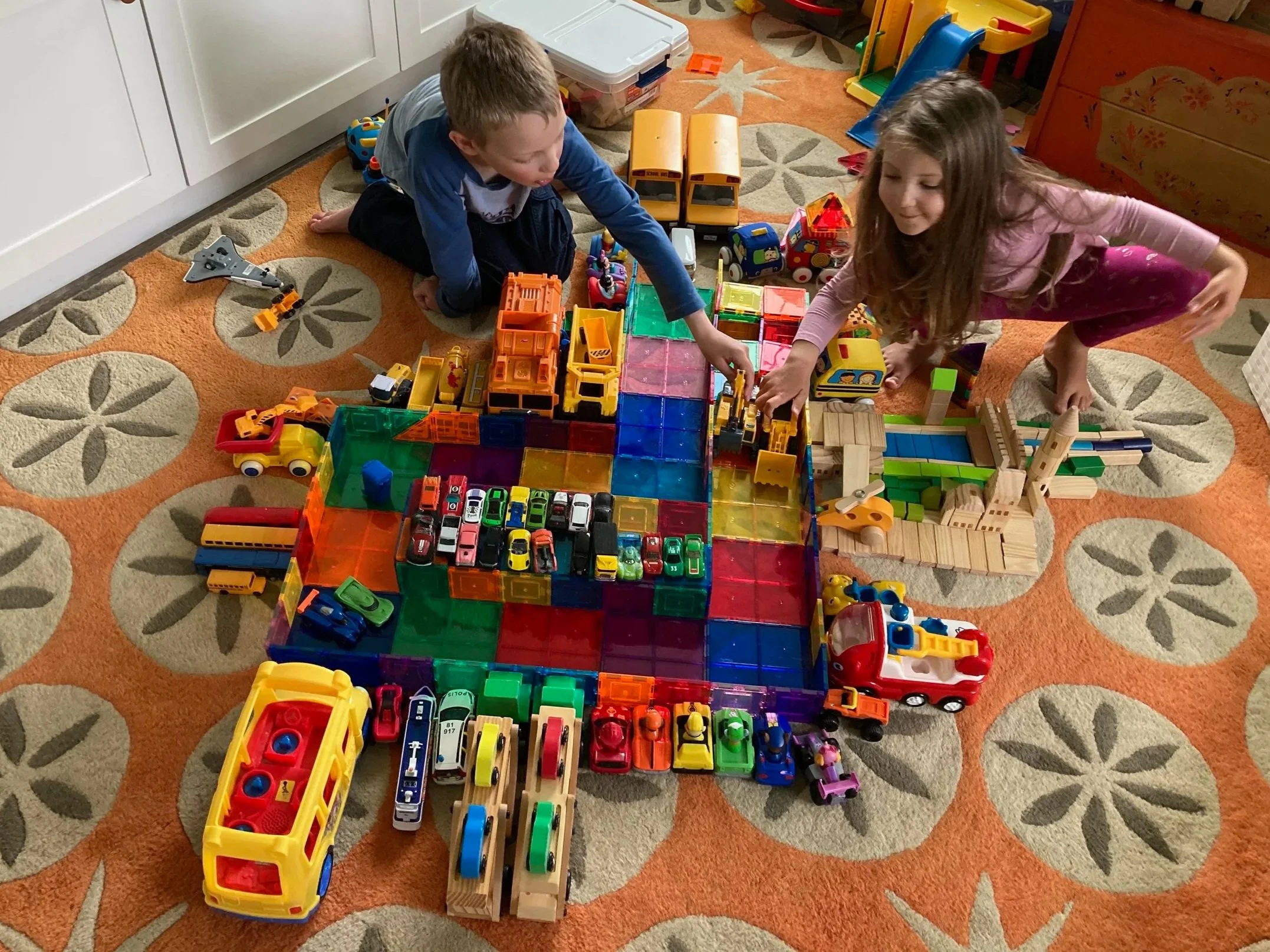
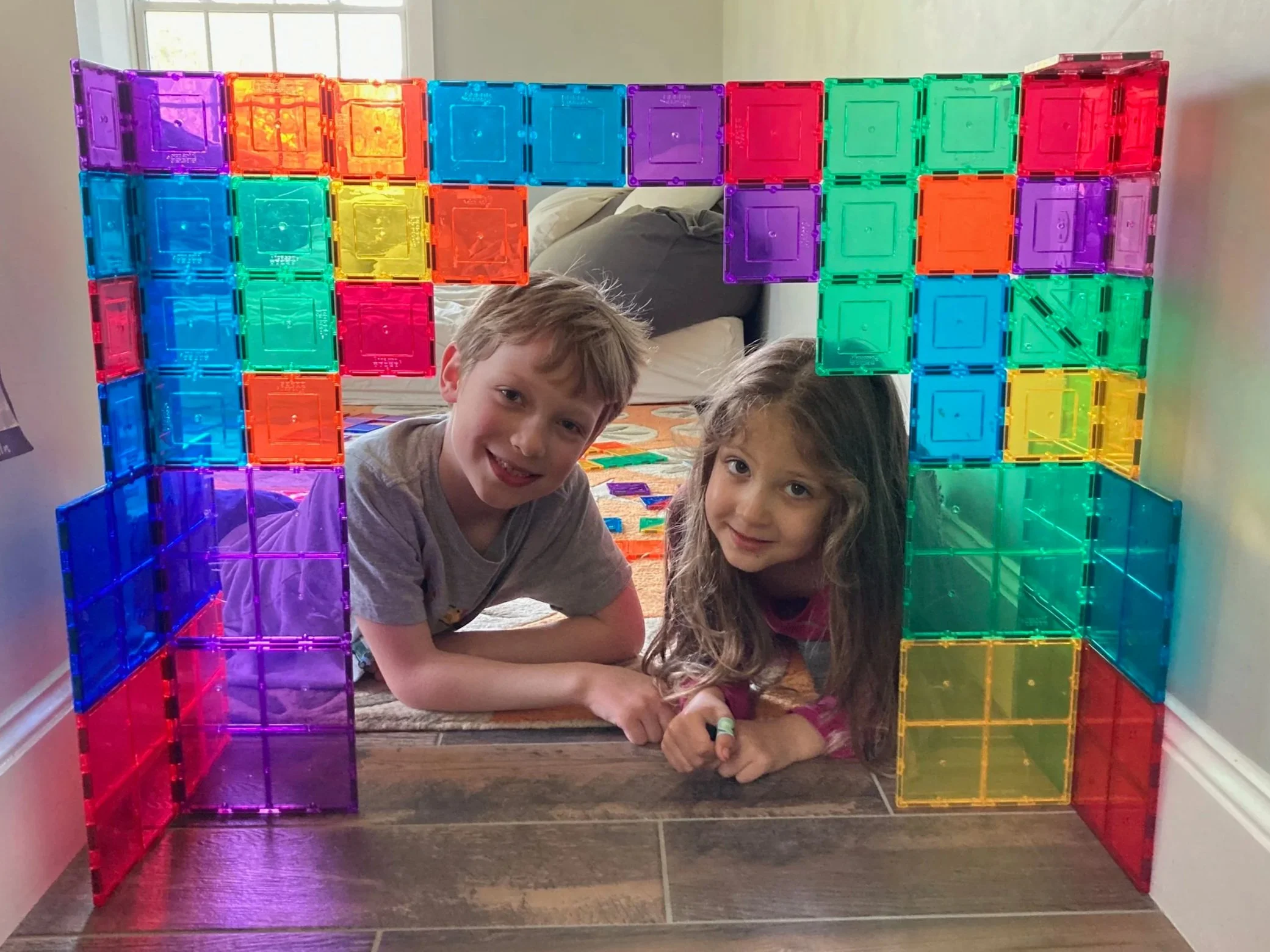
It’s amazing to look closely at children’s simple play and discover the intricate education happening beneath the surface. Now, the next time you see or hear about your child playing with blocks, we hope you smile with the knowledge of the profound skills being built, block by block.
We’d love to see any Harmony-inspired moments you capture along your child’s early years journey. Tag us (@HarmonyNLC) on Facebook and Instagram, and use hashtags #HarmonyNaturalLearningCenter #TheHarmonyApproach #HarmonyNLC
______________________________
Interested in introducing more of The Harmony Approach to your preschooler at home? Check out Harmony at Home today (FREE activities available).